

A good cup of saffron tea begins long before the kettle boils. It begins with vivid red threads, a warm hay-like aroma, and saffron that has been handled with care from harvest to kitchen. This guide to saffron tea benefits and recipe brings that experience into your daily ritual – with a simple preparation method and an honest look at what this golden infusion can offer.
Saffron is not an ingredient that needs to be used by the spoonful. A few quality threads can tint water a luminous gold and release a delicate flavor unlike any other spice: floral, lightly sweet, earthy, and gently honeyed. When the threads come from Herat, Afghanistan, a region known for exceptional saffron, the aroma is especially memorable.
Tea made with saffron is often chosen for the quiet pleasure of the ritual itself. The color develops slowly. The fragrance rises with the steam. The first sip is subtle rather than overpowering. It is a cup to drink without rushing.
Saffron contains naturally occurring plant compounds, including crocin, picrocrocin, and safranal. These compounds give saffron its deep color, distinctive taste, and aroma. They have also made saffron a valued ingredient in traditional food and wellness practices across Central Asia, the Middle East, South Asia, and the Mediterranean for generations.
For many people, saffron tea is a comforting caffeine-free alternative to black tea or coffee. It can fit nicely into an evening routine, a quiet morning, or a moment between meals when you want something fragrant without heaviness. If you add green or black tea, the experience changes – you gain a more familiar tea body and, depending on the tea, caffeine.
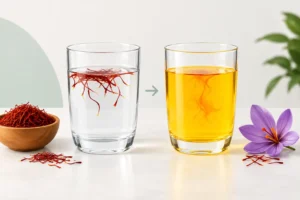
The quality of the threads matters. Fresh, pure saffron should look predominantly red, smell rich and floral, and slowly release golden color in warm water. Weak aroma, excessive yellow material, or an instant blast of unnaturally bright color can be signs that saffron is old, low-grade, or adulterated.
The most immediate benefit of saffron tea is sensory. Its aroma and warm golden color can make an ordinary pause feel intentional. The tea is naturally caffeine-free when prepared with saffron and water alone, and it contains no added sugar unless you choose to sweeten it.
Think of saffron tea as a beautiful addition to a well-rounded routine, not a miracle drink. Its greatest daily value may be the one you can taste: a clean, aromatic cup made with a spice that carries centuries of culinary heritage.
For one generous cup, use 8 to 12 saffron threads and 8 ounces of hot water. Choose a small number of strong, aromatic threads instead of adding a large pinch. Premium Super Negin saffron has excellent color strength, so restraint gives a more balanced cup.
First, gently crush the threads between clean fingers or with a mortar and pestle. You do not need to turn them into powder. Lightly breaking them helps expose more surface area and encourages an even bloom.
Place the crushed saffron in a cup or small heatproof pot. Pour in hot water that has rested briefly after boiling. Water around 180 to 195°F is ideal. Water at a rolling boil can flatten saffron’s delicate floral notes, especially if the threads are steeped for too long.
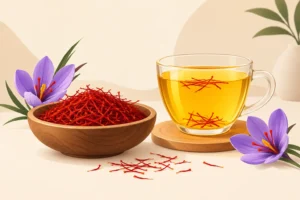
Cover and steep for 10 to 15 minutes. Covering the cup helps hold onto the fragrance. The liquid should turn a clear golden yellow, not an opaque red. Stir once, then taste.
Drink it plain to experience saffron’s true character. If you prefer a rounder, sweeter cup, add a small spoonful of honey or a little rock sugar. A touch of freshly crushed cardamom is a natural companion, while a thin slice of ginger adds gentle warmth. Keep additions light. Saffron deserves room to speak.
For a more substantial drink, prepare the saffron bloom with 2 tablespoons of hot water for 10 minutes. Warm 1 cup of milk or a plant-based alternative separately, then stir in the saffron liquid. Sweeten to taste with honey or sugar and add a pinch of cardamom if desired.
This version is richer and softer, but it will not highlight saffron’s aroma as clearly as a simple water infusion. It depends on the moment. Choose pure saffron tea when you want a clean, bright cup; choose saffron milk tea when you want comfort and body.
More saffron is not always better. For most home tea preparations, 8 to 12 threads per cup is plenty. If you are using smaller or less potent threads, you may need a few more. With high-quality saffron, adding too much can bring forward a bitter or medicinal edge.
Enjoying one cup daily is a practical place to start for most adults. Saffron used in normal culinary amounts is generally well tolerated, but concentrated supplements and very high intakes are different from cooking with threads. If you are pregnant, breastfeeding, managing a medical condition, or taking prescription medications, speak with a qualified health professional before using saffron regularly for wellness purposes.
Children should have only small, culinary amounts, and saffron tea should never be used as a substitute for medical advice or treatment. Purity matters here as much as flavor. Buy saffron from a source that identifies its origin and grade clearly.
The best saffron tea starts with threads that are intensely aromatic and naturally red. Look for dry, separate strands with trumpet-shaped ends and minimal yellow or white material. A faint golden-orange tint near the base of a thread can occur naturally, but the bulk should be red.
Super Negin Grade A+ saffron is especially well suited to tea because of its long red stigmas, strong aroma, and impressive color release. Farmers Saffron sources single-origin Afghan saffron directly from farming communities in Herat, where handpicked threads are naturally processed for a pure field-to-kitchen experience.
Avoid using powdered saffron when you can. Powder is convenient, but whole threads make it easier to judge color, aroma, and authenticity before brewing. They also let you control the strength of every cup.
Keep saffron threads in an airtight container, away from heat, moisture, and direct light. A cool, dark cabinet is better than a shelf near the stove. Avoid storing saffron in the refrigerator unless the container is fully sealed, since moisture and food odors can affect its aroma.
Saffron does not spoil quickly when stored properly, but its fragrance and color strength gradually fade. Use it while its aroma is vivid. Because only a few threads are needed for each cup, a small jar can make many memorable servings.
A cup of saffron tea is a small way to bring Afghan culinary heritage to your table. Brew it slowly, use threads worthy of the water, and let the color arrive in its own time.