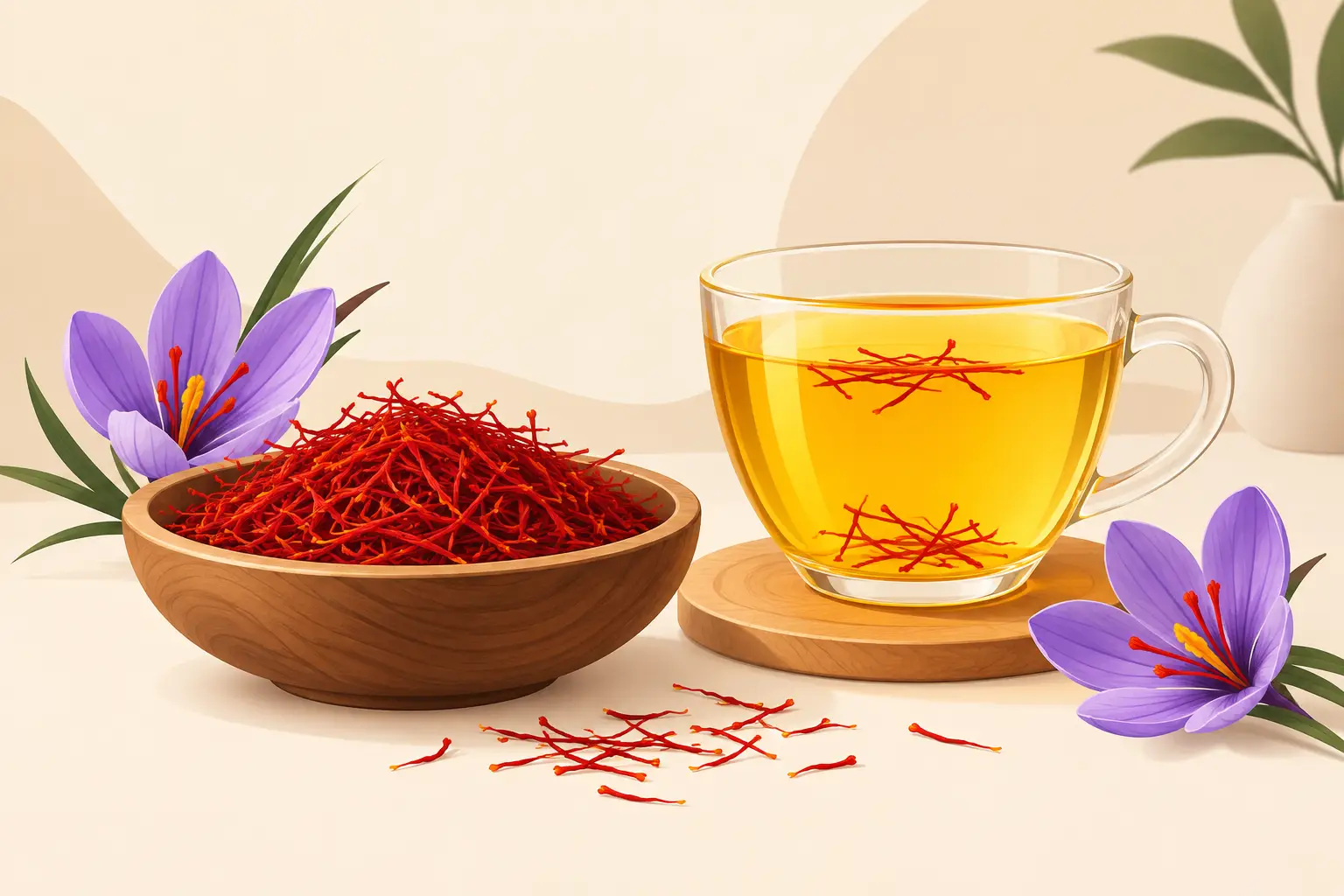
A beautiful cup of saffron tea should not taste sharp, dusty, or vaguely medicinal. It should open with a warm floral aroma, settle into a soft honeyed note, and glow a clear golden yellow. The best saffron tea begins long before the kettle boils – with real, potent saffron threads that carry the character of their origin.
For tea drinkers who value ingredients as much as ritual, saffron is not a powder to hide in a tea bag. It is a prized spice, handpicked from the flower of Crocus sativus and used with intention. A few quality threads can transform hot water into something fragrant, calming, and memorable.
Saffron tea is simple, which means there is nowhere for poor-quality saffron to hide. Weak or adulterated material may tint water quickly, but it will not deliver the layered aroma and lingering flavor that make this drink special. True saffron releases color gradually and leaves the cup fragrant rather than bitter.
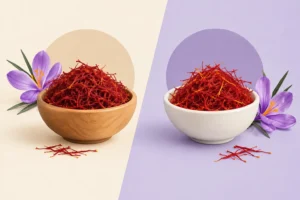
Look first at the threads. Premium saffron is predominantly deep crimson red, dry to the touch, and free from excessive yellow style or white base. Super Negin threads are especially valued for their long, vivid red appearance and intense aroma. They are selected for a fuller sensory experience, not merely for visual appeal.
Origin matters, too. Herat, Afghanistan, has earned global respect for saffron with exceptional color strength, fragrance, and flavor. The region’s growing conditions and generations of harvesting knowledge produce threads with a rich, expressive profile. When a seller clearly identifies where its saffron comes from and how it is handled, you have a stronger basis for judging quality.
Purity is the final test. Genuine saffron has a naturally sweet, hay-like, floral scent. It should not smell perfumed, chemical, or overly sugary. Avoid crushed powders when possible. Whole threads make it easier to see what you are buying and help protect you from fillers and imitation colorants.
Tea asks a lot from a small amount of spice. You need threads that can infuse gracefully without turning harsh. Whole Super Negin saffron gives you control over both strength and flavor, whether you prefer a light afternoon cup or a deeper infusion after dinner.
A good starting point is 6 to 10 threads per 8-ounce cup. That may seem modest, but saffron is concentrated. Adding a large pinch does not necessarily make a better tea. It can overpower the delicate floral character and leave a slightly medicinal edge. Start small, taste, and adjust on the next cup.
For the cleanest expression, use saffron alone with hot water. If you want a rounder, more familiar tea, pair it with ingredients that support rather than bury the saffron. Green cardamom, a thin slice of fresh ginger, honey, and a little rosewater can all work beautifully. Lemon is more divisive: its brightness can be refreshing, but too much acidity can mask saffron’s softer notes.
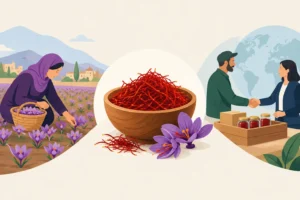
Farmers Saffron sources Super Negin Grade A+ threads directly from farming communities in Herat. The focus is simple: pure Afghan saffron, naturally processed and selected for the rich aroma and color that a proper cup requires.
Boiling water is useful, but boiling the threads aggressively is not. High heat can flatten saffron’s most delicate aromatic notes. A gentle bloom creates a more balanced cup and lets the color develop naturally.
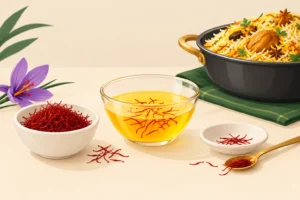
Place 6 to 10 saffron threads in a cup or small teapot. Add about 2 tablespoons of hot water that has rested for a minute after boiling. Cover and let the threads steep for 10 to 15 minutes. They will slowly release a golden-orange infusion.
Top with 6 to 8 ounces of hot water, then sweeten lightly if desired. Honey is a natural partner because it echoes saffron’s subtle sweetness. Drink it warm, while the aroma is still rising from the cup.
For a more concentrated infusion, gently crush the threads between your fingers or in a clean mortar. Do not grind them into a fine powder. Add the crushed threads to 2 tablespoons of hot water and let them bloom, covered, for 15 to 20 minutes.
Pour this golden concentrate into your cup and add hot water. This method is ideal when you want a stronger color or are making several servings. It also gives you a saffron base that can be added to black tea, green tea, or caffeine-free herbal blends.
Bring water to a boil with one lightly crushed cardamom pod per cup. Remove it from the heat, add your bloomed saffron, and cover for a few minutes. Serve with honey, sugar, or a small piece of rock candy on the side.
Cardamom adds a bright, citrusy warmth that feels at home with Afghan saffron. Keep the proportion restrained. The saffron should remain the center of the cup.
The most common mistake is using too many threads. Saffron tea is meant to be aromatic and elegant, not dense and aggressively spiced. If your cup tastes bitter or dry, reduce the amount next time or shorten the initial bloom.
Another mistake is relying on color alone. Some low-quality products release an immediate, dramatic yellow dye, yet contribute little aroma. Real saffron develops color gradually. The cup may become richly golden, but the fragrance and flavor are the better signs of quality.
Storage also affects every brew. Keep saffron threads in an airtight container, away from heat, moisture, and direct light. A pantry cabinet is usually better than a countertop spice rack. Do not refrigerate saffron unless your storage environment is unusually hot or humid, because condensation can damage the threads when the container is opened.
Finally, do not let a tea bag define your expectations. Convenient saffron blends can be pleasant, but they often contain very little saffron alongside stronger ingredients such as black tea, turmeric, cinnamon, or artificial flavoring. If you want to taste the spice itself, brew whole threads and build the blend yourself.
Saffron tea contains no caffeine on its own, so it suits quiet mornings, late afternoons, and evenings alike. It is often served after meals or shared with guests as a small gesture of generosity. Its color alone gives the table a sense of occasion.
Many people also enjoy saffron tea as part of a wellness-minded routine. Saffron has a long history in traditional food cultures, but a cup of tea should be appreciated as a flavorful ritual, not treated as a replacement for medical care. If you are pregnant, managing a health condition, or taking medication, speak with a qualified clinician before consuming large supplemental amounts of saffron.
For everyday brewing, a small jar of high-quality threads lasts longer than most people expect. Since each cup uses only a few strands, choosing authentic saffron can offer more value than buying a large quantity of weak material.
The best saffron tea is not complicated. It is clear water, a few crimson threads, patient steeping, and saffron worthy of the moment. Choose pure, aromatic threads with a known origin, use a light hand, and let their golden color arrive in its own time. From Herat to your table, that small pause can be the finest part of the day.