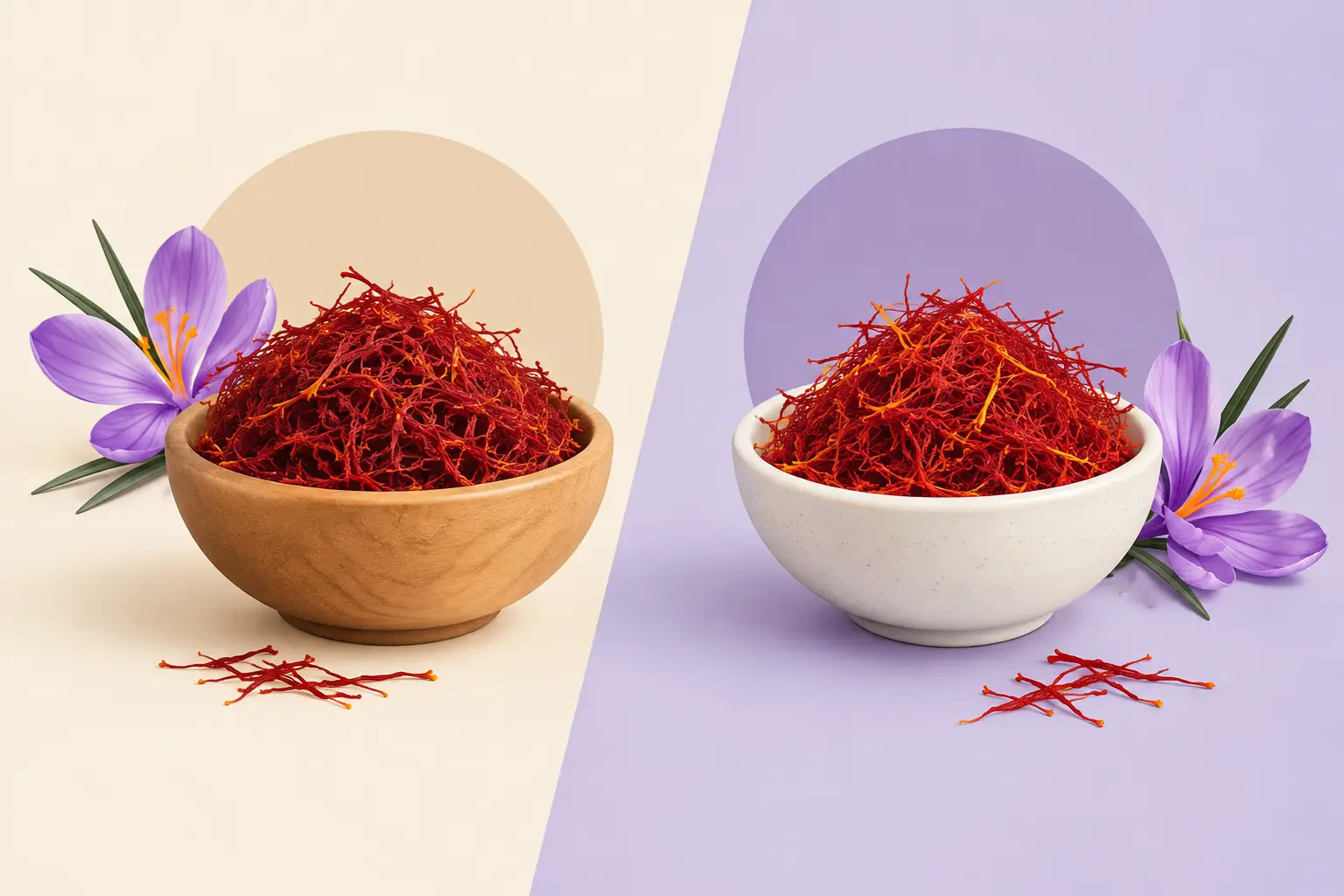
A jar of saffron can look beautiful and still leave a dish pale, flat, or unexpectedly bitter. That is why the question of Negin vs coupe saffron deserves more than a quick look at thread length. Both styles can contain real saffron. Both can create the golden color and warm aroma prized in rice, tea, desserts, and savory dishes. But their appearance, trimming style, and value can differ.
For shoppers who want pure Afghan saffron, the most useful question is not simply which name sounds more premium. It is whether the threads are deeply red, aromatic, clean, carefully handled, and traceable to a trusted growing region such as Herat. Grade names tell part of the story. The saffron itself tells the rest.
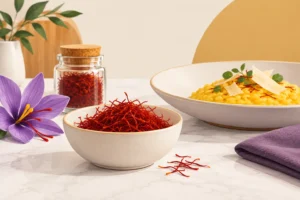
Negin saffron is known for its long, full red stigmas. The threads are usually thick, relatively uniform, and free of the yellow or white style at the base of the flower. Premium Super Negin is especially valued because it presents long, vivid red strands with a strong aroma and an elegant, gift-worthy appearance.
Coupe saffron, also written as coupé, refers to saffron that has been cut or trimmed to remove the yellow and white portions of the style. The goal is a product made up primarily of red stigma. Coupe threads may be shorter than Negin threads, depending on where they were cut and how the saffron was processed.
That creates an important point of overlap: high-quality Negin and high-quality coupe can both be all-red saffron. The names describe style and presentation more than a universal guarantee of potency. One seller’s coupe may be exceptionally aromatic, while another seller’s Negin may be weak, old, or poorly stored.
If visual presentation matters, Negin usually stands apart. Its long, separated threads create a refined look in a spice jar and on a finished dish. This is one reason Super Negin is popular for premium gifting, entertaining, and cooks who enjoy seeing the ingredient before it blooms in warm water.
Coupe saffron can look neater and more compact because its threads have been trimmed. It is often a practical choice for cooking, especially when the buyer cares less about long strands and more about obtaining clean red saffron for regular use.
Neither style should contain a noticeable amount of pale yellow style, dust, broken debris, or threads that look unnaturally glossy. Saffron threads should be dry, slightly trumpet-shaped at one end, and naturally varied rather than perfectly identical.
The best Negin and coupe saffron should both offer saffron’s signature character: a honeyed floral aroma, earthy warmth, and a subtle hay-like note. When bloomed correctly, the threads should release a rich golden-yellow to orange color. They should not turn water bright red immediately. Fast red bleeding can be a warning sign of artificial color.
Flavor is where freshness and handling matter as much as the grade name. Saffron’s beautiful color comes from crocin, while its aroma comes largely from safranal. Time, heat, humidity, and light slowly reduce those qualities. A fresh, properly packed coupe can outperform old Negin. Conversely, exceptional Super Negin can offer a deeper sensory experience because it has been carefully selected, dried, and protected from the field onward.
Saffron terminology is shaped by regional trade traditions. Names such as Negin, Super Negin, Sargol, Pushal, and coupe are widely used, but they are not always applied in exactly the same way by every supplier. A label alone cannot prove purity, origin, or color strength.
International quality testing often measures saffron through standards such as ISO 3632, which assesses characteristics including coloring strength, aroma-related compounds, and moisture. Those results can help commercial buyers compare lots, but home cooks can still make a smart purchase by looking for transparent sourcing, whole threads, a strong natural aroma, and packaging that protects the spice.
For wholesale buyers, consistency matters even more. A restaurant, bakery, or food manufacturer may need a particular thread cut for production, but it should also ask about harvest origin, lot consistency, storage conditions, and test documentation. The most attractive threads are not automatically the best fit for a high-volume recipe.
Choose Super Negin when you want a premium whole-thread experience. It is especially suited to gifting, special meals, saffron rice, Persian-style desserts, tea service, and recipes where the appearance of the threads adds to the occasion. Long red strands signal careful selection and bring a sense of ceremony to the kitchen.
Choose coupe saffron when you find a trusted source offering it at a favorable value and plan to bloom or grind it for everyday cooking. In dishes where saffron is infused into stock, milk, syrup, or warm water, thread length becomes less important after blooming. The fragrance, clean flavor, and coloring strength are what remain in the final dish.
There is no need to choose based on appearance alone. A home cook making a small batch of saffron milk cake may prefer Super Negin for its fragrance and visual quality. A caterer producing large pans of rice may choose coupe if the lot offers dependable performance and fits the food cost. The right choice depends on how you cook, how often you use saffron, and what you expect from each gram.
Pure saffron is always worth a closer look. Start with color. Good threads are predominantly crimson red, sometimes with a slightly darker red tip. Avoid products with excessive yellow material, overly uniform chopped pieces, or a powdery texture that makes inspection difficult.
Next, smell the saffron before using it. The aroma should feel concentrated but natural: sweet, floral, warm, and slightly earthy. It should not smell sharply chemical, perfumed, or stale. Then bloom a few threads by gently grinding them and steeping them in warm, not boiling, water for 15 to 20 minutes. The infusion should develop gradually into a luminous golden color with a warm, complex fragrance.
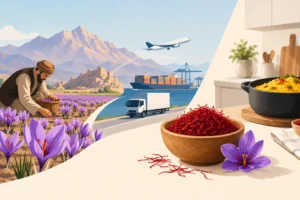
Finally, look for a clear origin story. Herat, Afghanistan, is one of the world’s most respected saffron-growing regions. Its dry climate, skilled hand harvesting, and generations of farming knowledge produce saffron with remarkable aroma and color. At Farmers Saffron, direct relationships with Afghan farmers help protect that journey from field to kitchen, with carefully selected Super Negin Grade A+ threads at the center of the collection.
Whether you buy Negin or coupe, poor storage can erase the difference. Keep saffron in an airtight container away from direct light, heat, and moisture. A cool, dark pantry cabinet is better than a shelf beside the stove. Avoid leaving threads in loose plastic bags or clear containers exposed to sunlight.
Buy an amount you can use while it is at its most aromatic. Small packs work well for occasional cooks, while larger quantities make sense for frequent baking, restaurant use, or gifting. The goal is simple: preserve the delicate oils and pigments that make authentic saffron so valuable.
The finest choice is the saffron that arrives as vivid, fragrant, whole red threads and earns its place in your cooking. Bloom it patiently, use it with intention, and let the harvest of Herat bring its golden character to your table.