

A few crimson threads can color an entire pot of rice, perfume a custard, or give tea its unmistakable honeyed aroma. The difference between a faint yellow dish and a deeply fragrant one often comes down to one small step: knowing how to bloom saffron threads before cooking.
Blooming is the gentle process of drawing saffron’s color, aroma, and flavor out of the threads before they meet the rest of a recipe. It takes only a few minutes, but it treats this precious spice with the care it deserves. With pure, aromatic Afghan saffron from Herat, a little goes a long way.
Saffron threads are the handpicked stigmas of the crocus flower. Their brilliant red color carries compounds that dissolve best when the threads are lightly crushed and steeped in a small amount of liquid. Blooming wakes up those compounds, creating a concentrated golden infusion ready for your dish.
Adding dry threads straight to food can work, particularly in a long-simmered stew. But the result is less predictable. Some threads may never fully open, while others can cling to a single bite rather than spreading their color evenly. A bloom gives you more control, better distribution, and a clearer sense of the saffron’s true quality.
This is especially worthwhile for recipes where saffron is meant to lead: Persian-style rice, Afghan pulao, risotto, paella, ice cream, milk puddings, syrups, and delicate teas.
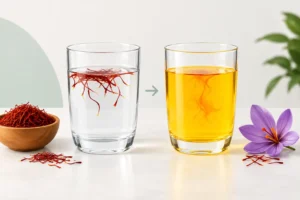
The ice method is a beautiful, patient way to prepare premium saffron. It is widely used in Persian and Afghan kitchens because the slow melt encourages a rich extraction without exposing the threads to harsh heat.
Start with a small pinch of saffron threads. For most home recipes serving four to six people, about 15 to 25 threads is enough. Exact amounts depend on the dish and the strength of your saffron. Super Negin threads are long, vivid, and potent, so restraint is part of good cooking.
Place the threads in a mortar and crush them gently with a pestle until they become a coarse powder. Do not grind aggressively for minutes. A few soft turns are enough to break the threads and release their surface area. If you do not have a mortar, press the threads between two spoons or use the back of a small bowl against a plate.
Add one or two small ice cubes to the ground saffron in a small cup or bowl. Let the ice melt at room temperature. As it melts, the liquid will turn golden, then a deeper amber-orange. Depending on the size of the cubes and room temperature, this usually takes 15 to 25 minutes.
When the ice has fully melted, your saffron bloom is ready. Stir it once and add both the liquid and any remaining fine particles to your recipe. That liquid is concentrated flavor, not garnish. Use every drop.
Saffron is sensitive to extremes. Very high heat can flatten its delicate floral aroma, while slow extraction allows its color and flavor to develop with more balance. The ice method is ideal when you have a little time and are preparing dishes that benefit from a clean, layered saffron presence.
It also makes a lovely ritual. The threads begin deep red. The melt becomes gold. Then the kitchen fills with a warm, hay-like, floral fragrance that signals authentic saffron is at work.
Warm water is the faster method, and it is excellent for everyday cooking. The key is warm, not boiling. Boiling water can push the aroma away before it reaches your food.
Crush your saffron threads first, then place them in a small heatproof cup. Pour over 2 to 3 tablespoons of warm water. Aim for water that is hot but no longer rolling or steaming furiously, roughly 150 to 160°F. If you have just boiled water, let it stand for several minutes before using it.
Cover the cup with a small saucer and let the saffron steep for 10 to 20 minutes. Covering helps keep the aroma in the cup rather than releasing it into the air. The bloom should look richly golden-orange and smell floral, warm, and distinctly saffron-like.
For recipes using milk, such as saffron milk cake or rice pudding, you may bloom the crushed threads in warm milk instead. For broths, rice, and savory sauces, water is usually the most versatile choice. The best liquid depends on where the bloom is going next.
A saffron bloom does not need long cooking once it enters the dish. In fact, add it later whenever the recipe allows.
For rice, drizzle the bloom over a portion of cooked rice reserved for the golden top layer, or fold it into the pot near the end of steaming. For risotto and paella, add it during the final part of cooking, when there is enough moisture to carry the flavor through the dish. For soups and stews, stir it in during the last 10 to 15 minutes of simmering.
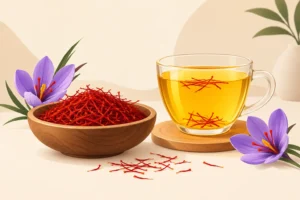
In baking and desserts, add the bloom with the wet ingredients so the color disperses evenly. For tea, pour hot water over the bloom or add the bloom to brewed tea, then let it sit briefly before serving.
The goal is not to cook saffron hard. The goal is to let its aroma remain present when the dish reaches the table.
The most common mistake is using too much saffron. More threads do not always mean a better dish. Excess saffron can turn medicinal or bitter, especially in light desserts and drinks. Begin with a modest amount, then learn the character of your threads over several recipes.
Another mistake is pouring boiling water directly over saffron. High heat gives color quickly, but it can sacrifice the nuanced aroma that makes pure saffron special. Choose warm water or the ice method instead.
Skipping the crushing step is also less effective. Whole threads can bloom, but lightly crushing them gives the liquid greater access to their color and flavor. Keep the powder coarse enough that it does not scatter away when you work with it.
Finally, avoid blooming saffron in a large cup of water. You want a concentrated infusion, not a diluted one. Two or three tablespoons of liquid are usually plenty. If your recipe needs more moisture, add ordinary water, broth, or milk separately.
There is no single perfect measure because thread size, harvest quality, and dish volume all matter. For a family-sized rice dish, a small pinch is generally enough. For a batch of custard, cookies, or saffron milk, begin with 10 to 20 threads. For a large pot of paella or a celebration meal, use a larger pinch, blooming it in the same small amount of liquid.
Premium saffron should offer strong color and aroma without requiring a heavy hand. Farmers Saffron Super Negin Grade A+ threads are naturally processed and handpicked in Herat, where saffron cultivation is part of a living agricultural heritage. Their potency means you can cook with precision rather than excess.
If you are serving saffron for the first time, bloom a modest amount and taste. The flavor should feel fragrant, lightly earthy, floral, and warm. It should never overpower the meal.
Even exceptional saffron needs protection from light, heat, and moisture. Keep the threads in an airtight container in a cool, dark cabinet. Avoid leaving the jar near the stove, on a sunny shelf, or open while you cook.
Do not refrigerate saffron unless your kitchen is consistently very hot and humid. Condensation can introduce moisture when the container is opened. A dry, dark pantry is usually the better choice.
Bloom only what you plan to use that day. Freshly prepared saffron water is at its most aromatic right away. If necessary, cover and refrigerate it for a few hours, but do not make large batches days in advance.
A properly bloomed cup of saffron is small, bright, and full of promise. Let it be the final golden touch on rice, the quiet richness in a dessert, or the aroma that turns an ordinary cup of tea into something worth lingering over.