
A great saffron chicken dish should smell warm, floral, and unmistakably inviting before it ever reaches the table. The secret is not using a heavy hand with saffron. It is knowing how to season saffron chicken so its golden color and delicate aroma can carry the dish, rather than disappear beneath too much spice.
Saffron is the Gold of Afghanistan for good reason. A few vivid red threads can transform chicken into something memorable, especially when they come from the sun-rich fields of Herat. Pair those threads with salt, gentle warmth, acidity, and enough time for the flavors to settle into the meat. The result is tender chicken with a rich golden hue and a fragrance that feels special without being overpowering.
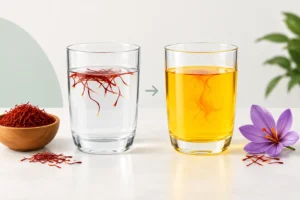
Seasoning begins before the chicken touches a bowl. Whole saffron threads need to be bloomed, which means steeping them in warm liquid to draw out their color, flavor, and aroma. This small step makes a major difference. Adding dry threads directly to chicken can leave the flavor uneven and wastes the full potential of a premium spice.
For about 2 pounds of chicken, use a generous pinch of high-quality saffron, usually 20 to 30 threads or roughly 1/8 teaspoon lightly crushed. Place the threads in a small mortar or between your fingers and gently crumble them. Do not grind them into dust. Add 2 to 3 tablespoons of hot water, warm chicken stock, or warm milk, then let them sit for 10 to 15 minutes.
The liquid should turn a deep golden yellow, not bright red. Authentic saffron releases color gradually and carries a floral, honey-like aroma with earthy depth. Super Negin saffron from Herat is especially prized for this intensity, so you need less than you may expect.
Saffron has a refined flavor. It works best beside seasonings that support it rather than compete for attention. Salt is essential, of course, but the most successful saffron chicken marinades also include a gentle allium, citrus or yogurt for brightness, and one or two warm spices.
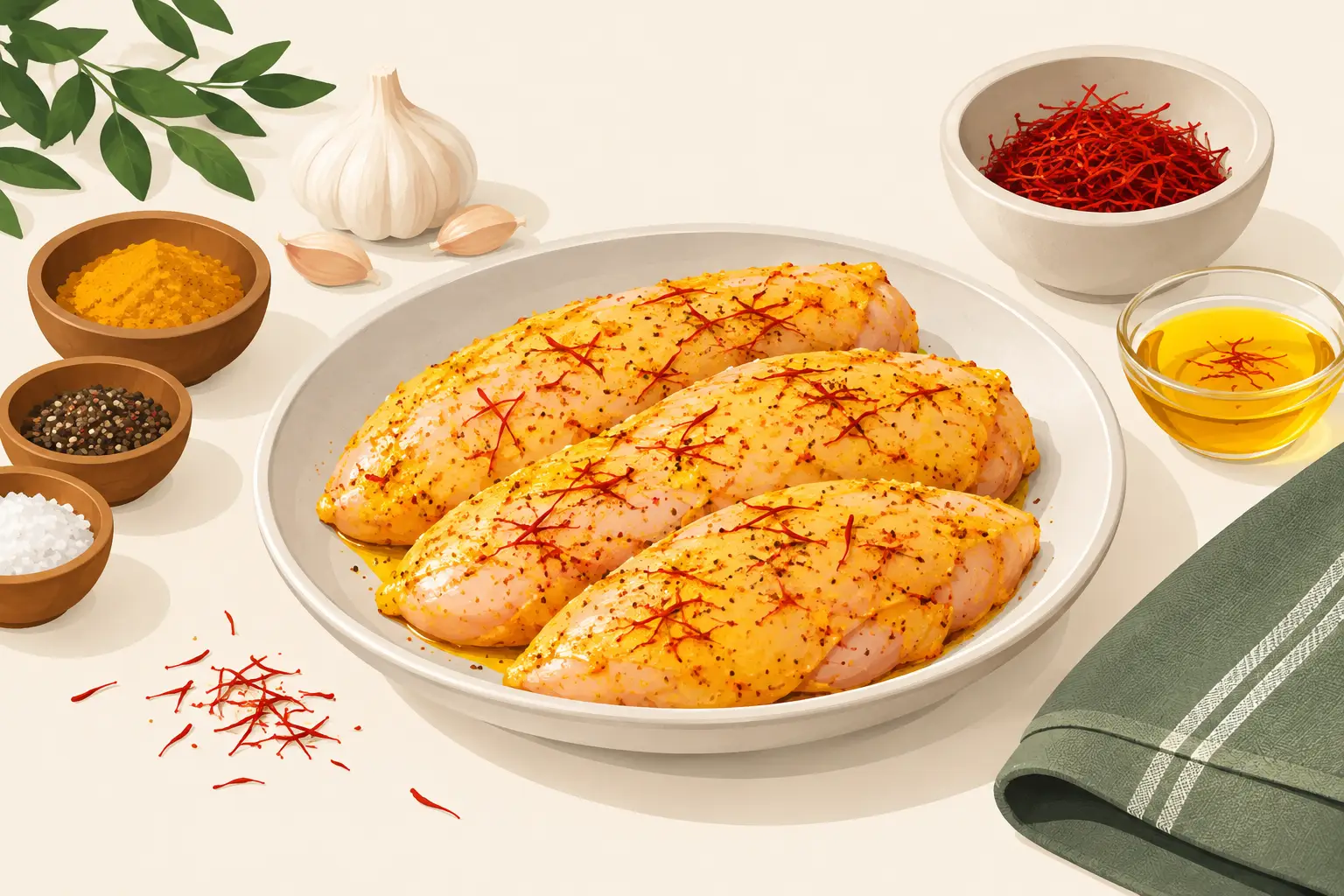
For 2 pounds of boneless chicken thighs, breasts, drumsticks, or a mix of pieces, combine the bloomed saffron and its liquid with 1 1/2 teaspoons kosher salt, 3 tablespoons plain Greek yogurt, 2 tablespoons olive oil, 2 grated garlic cloves, and the juice of half a lemon. Add 1/2 teaspoon ground turmeric for extra golden color, 1/2 teaspoon black pepper, and 1/4 teaspoon ground cumin.
That is enough seasoning for a classic, versatile result. The yogurt lightly tenderizes the chicken while helping the saffron marinade cling to every piece. Lemon gives the finished dish lift. Garlic, cumin, and pepper bring savory warmth without drowning out the saffron.
If you prefer a more Persian-inspired profile, add 1/4 teaspoon ground cardamom and a teaspoon of finely grated onion or onion juice. For a deeper, more savory roast, add a small pinch of cinnamon or sweet paprika. Keep either addition restrained. Saffron chicken should taste like saffron chicken, not a crowded spice blend.
Chicken thighs are the most forgiving choice. Their higher fat content stands up beautifully to a saffron-yogurt marinade and stays juicy over a grill, in a skillet, or in the oven. Bone-in thighs and drumsticks are excellent for roasting because the seasoning has time to perfume the meat as it cooks.
Chicken breast can be equally delicious, but it needs more care. Marinate it for a shorter time and cook only until done to avoid dryness. If using breast pieces for skewers, cut them evenly so the saffron seasoning cooks consistently from edge to center.
A whole chicken works, too. Make a slightly larger batch of marinade, loosen the skin over the breast and thighs, and rub some of the saffron mixture directly onto the meat. The skin will protect the chicken while the perfume of saffron, lemon, and garlic settles in.
Marinate saffron chicken for at least 2 hours. Four to eight hours is better for thighs, drumsticks, and bone-in cuts. Refrigerate the chicken in a covered glass or food-safe container, then bring it toward room temperature for 20 to 30 minutes before cooking.
Avoid leaving chicken in a strongly acidic marinade overnight, especially if you are using breast meat. Too much lemon can alter the texture and make the outer layer soft or chalky. Yogurt is gentler, but saffron itself does not need an excessively long marinade to make an impression.
Before cooking, scrape off only large clumps of yogurt or onion. Leave a thin coating on the chicken. That layer carries the saffron color and helps create flavorful browned edges.
High heat can brown chicken beautifully, but saffron’s aroma is delicate. The best method depends on the cut and the meal you want to serve.
For skillet chicken, sear marinated thighs in a little oil over medium-high heat until golden on both sides, then lower the heat and cover until cooked through. A splash of chicken stock near the end creates a light saffron pan sauce. Do not boil the sauce hard for long periods. Gentle heat preserves more of the fragrance.
For roasted chicken, arrange the pieces in a lightly oiled baking dish and cook at 425°F until browned and the thickest part reaches 165°F. Thighs may benefit from a few additional minutes for tenderness. Spoon the pan juices over the chicken before serving. Those juices hold the citrus, saffron, and savory seasoning you worked to build.
For grilled saffron chicken, use thighs or skewered breast pieces and cook over medium to medium-high heat. Because yogurt can char, clean and oil the grates well. Move the chicken away from direct flame if the outside darkens before the center is cooked.
A final touch can make saffron chicken feel restaurant-worthy. It does not need a complicated sauce. A small squeeze of lemon, a scattering of chopped parsley or cilantro, and a pinch of flaky salt are often enough.
For a more traditional Afghan-inspired table, serve it with fragrant basmati rice, warm flatbread, cucumber yogurt, or a bright side of barberries. The tart pop of barberries is particularly beautiful with saffron’s floral richness. A simple tomato and cucumber salad also brings freshness to grilled or roasted chicken.
If you want more color in the rice, bloom a few additional saffron threads separately and drizzle the liquid over the finished rice just before serving. Keep the chicken seasoning and the rice seasoning distinct enough that each element still has its own character.
The most common mistake is adding too much saffron. More threads do not always mean more elegance. Overusing saffron can push its flavor toward medicinal or metallic, especially if the threads are very potent. Start with a modest pinch, then learn how your saffron performs.
The second mistake is treating turmeric as a replacement for saffron. Turmeric adds color and earthiness, but it cannot provide saffron’s floral aroma. Use turmeric as a supporting spice if desired, not as proof that a dish is saffron chicken.
Finally, do not mask the marinade with heavy sauces. Creamy sauces, barbecue sauce, and aggressive chili blends can be delicious, but they change the purpose of the dish. When you choose premium Afghan saffron, let its origin, purity, and naturally exceptional aroma remain present on the plate.
Store unused threads in an airtight container away from heat, moisture, and direct light. Properly stored saffron keeps its character far longer, ready for the next chicken dinner, rice dish, tea, or celebration meal. Farmers Saffron brings handpicked Herat saffron from field to kitchen, where a small pinch can turn an ordinary meal into one worth lingering over.
Season with restraint, cook with attention, and let the saffron speak for itself.