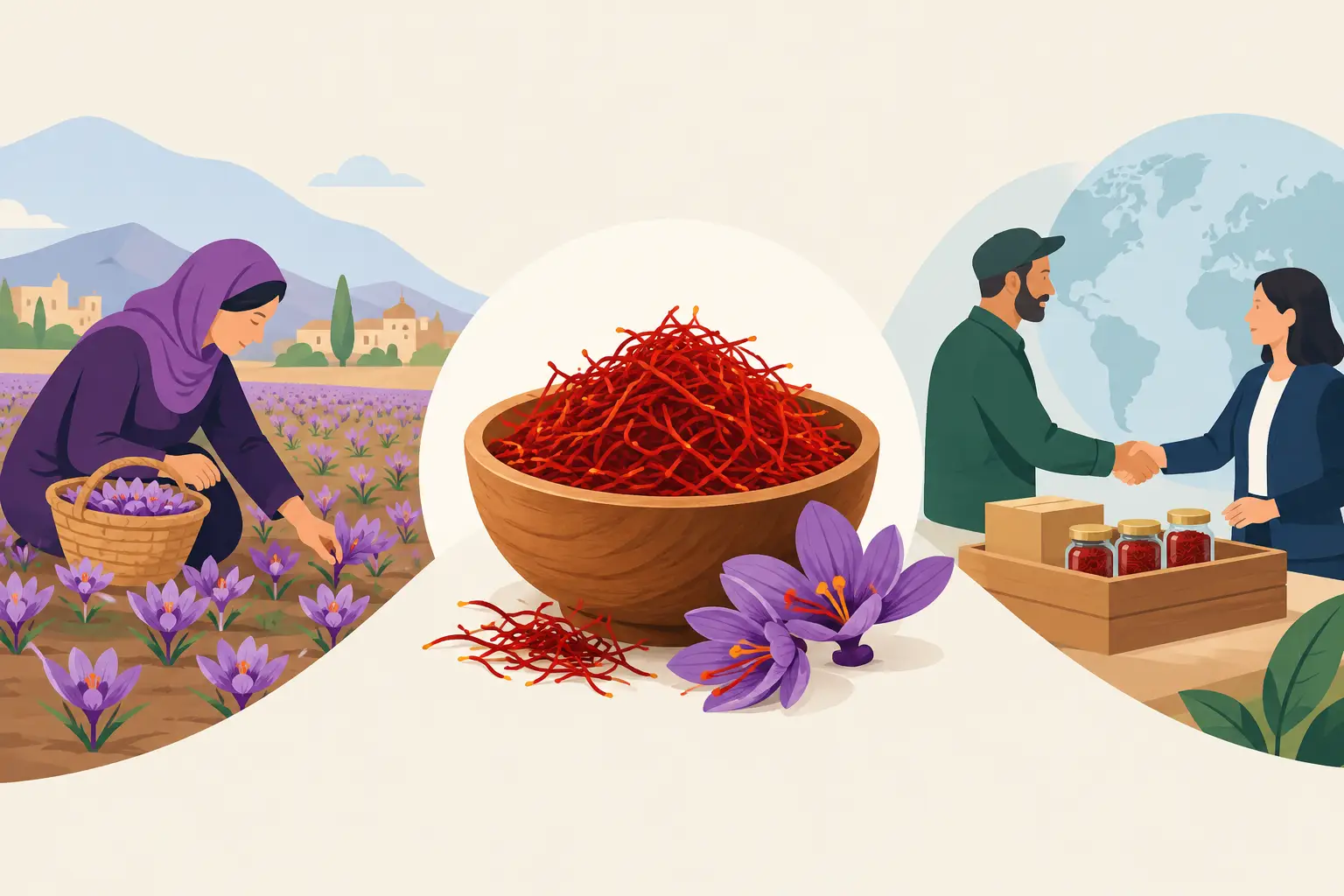
A jar of saffron should tell a clear story before the first thread reaches your mortar. The best direct trade saffron examples begin in the fields, with known growers, a defined harvest region, and careful handling that protects the spice’s deep red color and honeyed, hay-like aroma. For saffron buyers, that story matters. Saffron is sold in tiny quantities, carries a premium price, and is too often diluted, mislabeled, or stripped of its character by long, unclear supply chains.
Direct trade is not simply a phrase printed on a package. At its best, it is a sourcing relationship that gives growers a clearer route to market and gives cooks a clearer answer to a basic question: where did these threads come from?
Saffron comes from the hand-harvested stigmas of the Crocus sativus flower. Each bloom yields only three delicate red threads, and the harvest window is brief. That makes every step after picking consequential. Threads must be separated with care, dried properly, sorted, packed, and protected from moisture, heat, and excessive light.
In a conventional chain, saffron may pass through local collectors, brokers, exporters, importers, repackers, and retailers. Each participant can have a legitimate role. But the more hands involved, the harder it can be to preserve lot-level information, confirm quality standards, and trace how the farmer was paid.
A direct trade model shortens that distance. It does not always mean one farmer selling directly to one home cook. Saffron is commonly produced by many small farming households, so responsible direct trade can involve a trusted farm group, cooperative, or local sourcing partner. The defining point is an active, transparent relationship with producers rather than anonymous buying on the open commodity market.
Herat, Afghanistan, is respected for saffron with vivid crimson threads, strong coloring power, and an exceptionally aromatic profile. A meaningful direct trade example is a seller that works with growers in this specific region year after year, rather than purchasing saffron described only as “Afghan” after it has changed hands several times.
This kind of relationship makes origin more than a marketing line. The seller can identify the region, understand seasonal conditions, and establish standards with growers before harvest begins. For the cook, that traceability supports a more dependable experience in saffron rice, Persian-style tea, golden desserts, or a fragrant seafood broth.
Direct trade should influence quality before the saffron is packed. A buyer working closely with farmers can set expectations for careful flower collection, clean separation of the stigmas, and prompt drying. These details help preserve the compounds responsible for saffron’s color, flavor, and aroma.
The trade-off is that this approach requires time, local knowledge, and a willingness to reject material that does not meet the agreed standard. It is not the cheapest way to source saffron. It is the more disciplined way to protect a premium ingredient.
For Grade A+ Super Negin saffron, thread selection matters especially. Long, mostly red stigmas with minimal yellow style are valued for both appearance and concentration. A direct sourcing relationship gives the buyer a better chance to verify what is being selected instead of relying only on a broad grade name after the fact.
One of the strongest direct trade saffron examples is a buyer that returns to the same farming communities across seasons. Repeat purchasing gives farmers more than a single sale. It can provide a more predictable market for a labor-intensive crop and create an incentive to maintain the careful work that quality saffron requires.
Price alone does not prove ethical trade. A higher retail price does not automatically mean farmers received more, and a lower price does not always mean poor practice. What matters is whether the company can explain its relationship with producers, why it buys from them, and how it supports quality at the source.
For customers, the benefit is not abstract. When producers are valued as long-term partners, there is more reason to preserve regional skill, protect harvest standards, and avoid the shortcuts that lead to weak or questionable saffron.
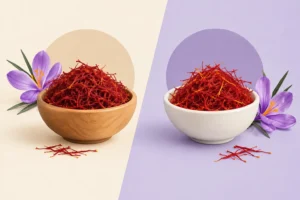
Good saffron is sensory. Open the container and you should notice a powerful, clean fragrance – floral, warm, and slightly earthy. The threads should be predominantly deep red, dry but not brittle, and visibly intact. Direct trade makes it easier to evaluate these traits close to the source and select lots that reflect the desired grade.
This is different from assuming every harvest is identical. Weather, drying conditions, and storage can vary from season to season. An honest supplier does not promise that nature will produce the exact same saffron every year. Instead, it maintains a clear standard and assesses each lot before it reaches the kitchen.
At Farmers Saffron, the focus is Afghan Super Negin Grade A+ threads from Herat: handpicked, naturally processed, and chosen for rich aroma and color strength. That is the practical value of a field-to-kitchen supply chain. Quality is not left to chance at the final shelf.
Direct trade does not end when saffron leaves the farm. A beautiful harvest can lose its potency if it is repacked carelessly or stored in poor conditions. Saffron needs protection from direct sunlight, humidity, and heat. Secure packaging and clear storage guidance are part of honoring the ingredient and the people who produced it.
For home cooks, a small container can be the right choice if saffron is used occasionally for tea, baking, or special meals. Frequent cooks may prefer larger sizes or multipacks. Restaurants, bakeries, and food makers need bulk formats, but should still expect the same answers about origin, grade, and handling. Size changes. Traceability should not.
A direct trade claim deserves a few simple questions. Can the seller name the growing region? Do they explain whether they work with individual farmers, a farm group, or a local partner? Can they describe the grade and the characteristics they select for? Do they provide practical storage instructions instead of treating saffron like an ordinary dried spice?
Look closely at the product itself, too. Whole threads are easier to assess than powder, which is more vulnerable to adulteration. Predominantly red threads, a distinct natural aroma, and strong coloring performance are encouraging signs. Avoid saffron that looks dusty, unusually uniform in a synthetic way, or is sold with vague origin claims and an implausibly low price.
Still, appearance alone cannot prove every part of a supply chain. That is why transparency matters. The most trustworthy sellers pair sensory quality with specific, consistent information about where the saffron was grown and how it was sourced.
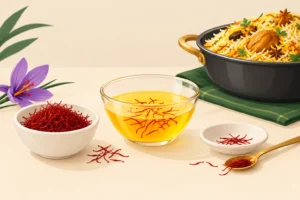
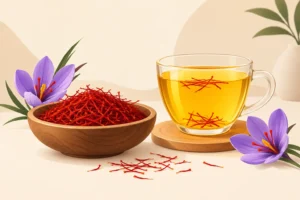
Direct trade changes what happens when you bloom a small pinch of threads in warm water or ice. You are not merely adding yellow color. You are bringing forward the careful harvest, sorting, and drying decisions that preserved saffron’s character.
Use a light hand. Crush a few threads, bloom them gently, and let the color and aroma carry through rice, custard, tea, or a celebratory dish shared at the table. When the origin is clear and the threads are pure, a little saffron has a long way to go.