
A few crimson threads in warm water can turn a dish golden, but does saffron dissolve completely? No. Genuine saffron threads soften and release their color, aroma, and flavor into liquid, yet the threads themselves remain visible. That slow release is part of the ingredient’s character – and part of the reason authentic saffron is so prized.
Pure saffron is the handpicked stigma of the Crocus sativus flower. It is not a powder, dye, or instant beverage mix. When treated well, the threads give their essence to water, milk, broth, or tea without disappearing.
Saffron does not dissolve in the way sugar or salt does. Instead, its natural compounds gradually infuse the surrounding liquid. The deep golden color comes primarily from crocin, while its distinctive fragrance develops from aromatic compounds released during blooming and cooking.
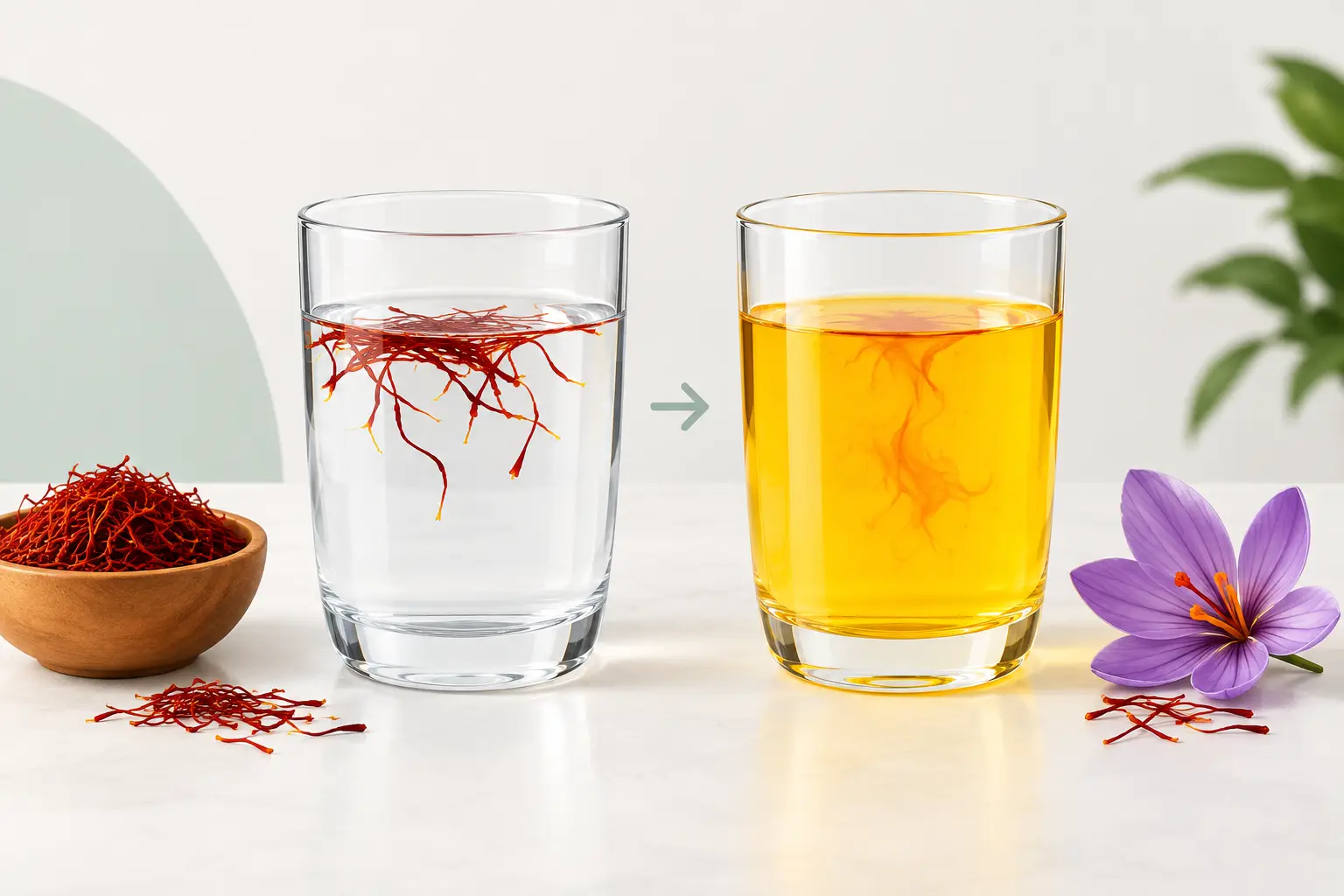
After several minutes in warm liquid, high-quality threads will look softer and lighter than they did when dry. They may fray slightly at the ends. But they should still be recognizable as threads, even after they have released a remarkable amount of color.
This matters in the kitchen. If you expect the threads to vanish, you may assume something is wrong and add too much saffron. In reality, a small pinch of potent Super Negin saffron can perfume and color an entire recipe while the strands remain at the bottom of the cup or scattered through the finished dish.
When pure saffron is bloomed, the change is gradual. The water begins as pale yellow, then becomes a warm gold to orange-gold as the infusion strengthens. The aroma should be floral, hay-like, warm, and slightly honeyed, with an earthy edge. It should smell complex, never sharply chemical or like artificial perfume.
The threads will not instantly turn the water bright red. Nor should they melt into a thick colored paste. Those dramatic reactions can be a warning sign, particularly when saffron has been dyed or mixed with other plant material.
Still, water behavior is only one clue. A colored infusion alone does not prove authenticity. Some adulterated products are designed to release color quickly. The strongest assessment considers several details together: vivid naturally red threads, minimal yellow style, a dry texture, a rich aroma, slow golden infusion, and a trusted origin.
Afghan saffron from Herat is known for its strength, color, and elegant aroma. At Farmers Saffron, our Super Negin Grade A+ threads are sourced directly from Afghan farming communities, carefully selected for the long red stigmas and natural potency that make blooming such a rewarding ritual.
A saffron thread is plant tissue. Water can draw flavor and color compounds out of that tissue, but it does not break down the thread immediately. Think of loose-leaf tea: the leaf gives the water its character, while the leaf itself remains.
The thread may become delicate after a long soak or extended simmer. If pressed between your fingers, it can break apart. That is different from dissolving. The remaining thread has already done most of its work, and it is safe to eat in the dish.
The rate of infusion depends on a few practical factors. Finely crushed threads expose more surface area and release their color faster. Warm water extracts more readily than cold water. Fresh, properly stored saffron has more aroma and color to give than threads that have sat exposed to heat, humidity, or direct light.
Blooming is the simplest way to get the most from premium saffron. Rather than dropping dry threads directly into a large pot, prepare a concentrated infusion first. This distributes the flavor evenly and protects the delicate aroma from excessive heat.
Start with the amount your recipe calls for. For many rice dishes, desserts, teas, and sauces, a generous pinch is enough. Gently crush the threads with a mortar and pestle or between clean fingers. You do not need to grind them into a perfectly fine powder. Breaking them slightly is enough.
Place the saffron in a small cup and add a few tablespoons of warm water, warm milk, or warm broth. The liquid should be hot but not boiling. Let it rest for 10 to 20 minutes. As it blooms, the liquid will develop a clear, radiant golden color and a fuller fragrance.
Add both the infusion and the softened threads to your recipe. For rice, stir the saffron liquid into a portion of cooked rice and layer it over the top. For milk-based desserts, add it after the base is warm. For tea, allow the threads to steep gently rather than boiling them hard.
High heat will not make saffron dissolve. It can, however, flatten its finer aromatic notes. A long, rolling boil may leave you with color but less of the floral complexity that makes saffron special.
Gentle heat and time are the better trade-off. Bloom first, then add saffron near the appropriate stage of cooking. In recipes that simmer for a long time, such as stews or broths, use a moderate amount and add the infusion later so its fragrance remains present at the table.
Yes, but patience is required. Cold water extraction can create a smooth, fragrant infusion, especially if the threads soak for several hours or overnight in the refrigerator. It is useful for delicate drinks and desserts where heat is not desired.
For everyday cooking, warm water is more convenient and reliable. It brings out the color and aroma quickly without subjecting the threads to harsh heat.
Not necessarily. If you crush saffron before blooming it, you may see tiny natural particles settle in the cup. This is normal. Fine saffron fragments are not the same as cloudy water, gritty filler, or an artificial residue.
Whole threads can also leave a little color behind after you remove them from the liquid. That is why it is usually best to add the entire infusion, threads included, to the recipe. You are using every part of the bloom.
If an infusion appears unusually cloudy, smells artificial, or produces a harsh red dye almost instantly, pause before using it. Quality saffron should feel clean and aromatic, not theatrical. Authentic ingredients do not need to perform a trick to prove their value.
The question is not simply whether saffron dissolves. It is whether it delivers the color, aroma, and flavor expected from carefully harvested stigmas. Look closely before you bloom it.
Premium threads should be predominantly red, dry, and naturally irregular rather than uniformly cut or glossy. Super Negin saffron is valued for its long red stigmas and minimal yellow portions. The fragrance should be pronounced even before water is added.
Storage also affects performance. Keep saffron tightly sealed in a cool, dark, dry place. Avoid the windowsill, a humid spice rack near the stove, or a loosely closed bag. Light, air, and moisture gradually weaken the compounds that give saffron its celebrated color and scent.
No. Add the threads and the golden liquid to your recipe. The softened threads are edible and continue to contribute subtle flavor.
That is normal. Pure saffron releases color while retaining much of its red thread structure. The threads may become softer and paler, but they do not need to turn white to be effective.
You can, particularly in soups, rice, and other recipes with enough moisture and cooking time. Blooming is preferable when you want even color, better aroma, and full value from a small amount of saffron.
Treat saffron as the rare flower it is. Give the threads a little warmth, a little time, and room to bloom. The gold in your cup is the proof – not whether the threads disappear.