A tiny pinch of real saffron can perfume an entire pot of rice, turn custard a warm golden hue, and bring a honeyed, floral depth to tea. That concentration is exactly why saffron is often imitated, diluted, or sold with unclear quality claims. Knowing how to identify pure saffron threads helps you buy with confidence and get the color, aroma, and flavor this treasured spice is meant to deliver.
Pure saffron comes from only one part of one flower: the red stigma of Crocus sativus. Each flower produces just three delicate stigmas, handpicked during a brief autumn harvest. The process is demanding, and authentic threads carry the evidence of that work in their shape, scent, and performance in the kitchen.
Look at saffron before you smell it or steep it. Genuine saffron consists of fine, dry threads that are red to deep crimson. The best threads are not perfectly uniform, because they are a natural crop handled by people, not a manufactured ingredient.
A true stigma is typically narrow at one end and gently flared or trumpet-shaped at the other. Super Negin saffron is valued for its long, mostly all-red stigmas with minimal yellow style attached. That strong red appearance often means more usable color and less floral waste by weight.
Be wary of strands that look flat, ribbon-like, overly smooth, or all cut to the same length. Dyed corn silk, shredded plant fibers, coconut filaments, and other look-alikes may be mixed into low-quality saffron. They often lack the natural taper and flared end of a real stigma.
A small amount of yellow or orange near the base does not automatically mean the saffron is fake. It may be part of the style, the structure that connects the stigma to the flower. However, a container with many yellow pieces, pale fragments, or powder has less red stigma content and usually offers lower value.
High-quality saffron should look richly red, sometimes with subtle burgundy or orange-red variation. It should not resemble neon-red dyed fibers. Very bright, uniform color can be a reason to look more closely, especially if the threads also have little aroma or stain your fingers immediately when dry.
Saffron is fragile. A few broken pieces can happen during packing and shipping. What matters is the overall appearance: clean, dry, mostly intact threads with clear natural structure.
Open the container and smell the threads. Pure saffron has a distinctive aroma that is warm, dry, floral, hay-like, and slightly honeyed. Some people notice notes of sweet grass, earth, or fresh tobacco. The fragrance should feel complex and elegant, not candy-like.
Authentic saffron is often described as sweet-smelling, but its flavor is not sugary. A strong perfume that resembles artificial fruit, vanilla, or syrup may indicate added fragrance or an inferior product. Threads with almost no aroma may be old, poorly stored, or low in potency.
Aroma alone cannot certify purity. Scent perception varies, and saffron can lose fragrance when exposed to heat, light, air, or moisture. Still, when a vivid red thread, a naturally flared shape, and a full saffron aroma appear together, they are meaningful signs of quality.
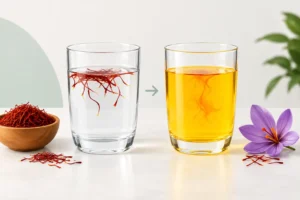
The warm-water infusion test is useful, but it is often oversimplified. Place a few threads in a small glass of warm water. Real saffron gradually releases a golden-yellow color, often beginning around the threads and spreading through the water. The liquid should become golden, not harsh red.
The threads should remain visibly red or dark red for a while as they infuse. They will soften and eventually fade somewhat, but they should not turn instantly white. If the water becomes bright red within seconds and the threads lose all color immediately, added dye is a real possibility.
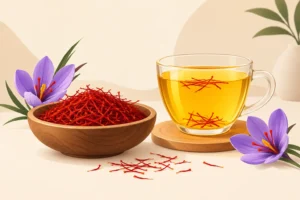
Give the infusion time. Good saffron rewards patience. After 10 to 20 minutes, the water should smell distinctly saffron-like and take on a clear golden color. This is the infusion you can use for rice, tea, sauces, baking, or desserts.
A color test can raise concerns, but it cannot prove purity. Some adulterated materials are treated with colorants that release gradually. Conversely, a very fresh, potent saffron may color water quickly without being fake. Use this test alongside the thread shape, aroma, supplier information, and price.
Avoid testing saffron in boiling water. Excessive heat can flatten its delicate aroma. Warm water works well, and many cooks get even better results by gently crushing threads first, then blooming them in warm water for 15 to 20 minutes.
If you want another sensory check, place one thread on your tongue. Pure saffron tastes slightly bitter, earthy, and aromatic. It should not taste sweet. A sweet taste can suggest that the product has been mixed with sugar or another filler.
Use only a thread or two for this test. Saffron is powerful, and there is no need to consume more than a tiny amount just to assess it. Flavor is also subjective, so treat this as supporting evidence rather than a final verdict.
For a premium spice, the package should make it easy to understand what you are buying. Look for saffron sold as whole threads, not vague descriptions such as “saffron seasoning” or “saffron powder.” Ground saffron can be convenient, but it is much harder for a buyer to inspect and much easier to adulterate.
Clear origin matters. Afghanistan, particularly Herat, has a long saffron-growing heritage and is known for deeply aromatic, high-color saffron. Yet origin alone is not a purity guarantee. The stronger signal is a seller that identifies the growing region, grade, thread form, and sourcing practices rather than relying on broad luxury language.
For commercial buyers and serious home cooks, ask whether a supplier provides batch-level quality information or independent testing. Saffron quality is commonly evaluated through measures associated with color strength, aroma, and flavor. These tests can help verify potency, although a laboratory result should be paired with transparent sourcing and careful handling.
Saffron is labor-intensive by nature. A price that appears dramatically lower than comparable thread saffron deserves scrutiny. It does not mean every affordable jar is fake, but genuine saffron cannot be produced at bargain-basement prices without compromises somewhere in the chain.
Compare like for like. Check the net weight, whether the product is whole threads, the stated grade, and the origin. A small jar can look expensive until you realize that a recipe may need only a generous pinch. High-potency saffron often goes further than weak threads that require repeated additions to achieve color.
The most dependable way to avoid adulterated saffron is to buy from a source that can explain its path from farm to kitchen. Look for direct relationships with growers, a stated harvest region, whole-thread presentation, protective packaging, and a clear standard for grade and freshness.
At Farmers Saffron, our Super Negin Grade A+ threads are sourced directly from farming communities in Herat, Afghanistan. They are handpicked, naturally processed, and selected for the vivid red color and exceptionally aromatic character that make Afghan saffron The Gold of Afghanistan.
Once you have good saffron, protect it. Keep threads in an airtight container in a cool, dark cupboard, away from the stove and direct sunlight. Do not refrigerate them unless the container is fully sealed against moisture. Proper storage preserves the fragrant oils that make each pinch valuable.
Pure saffron should feel like a special ingredient before it ever reaches the pan: crimson threads, a dry floral perfume, and a patient golden bloom in warm water. Trust those signs, but trust transparent sourcing most of all. When you know where your saffron was grown and how it was handled, every dish carries more than color – it carries the care of the harvest.