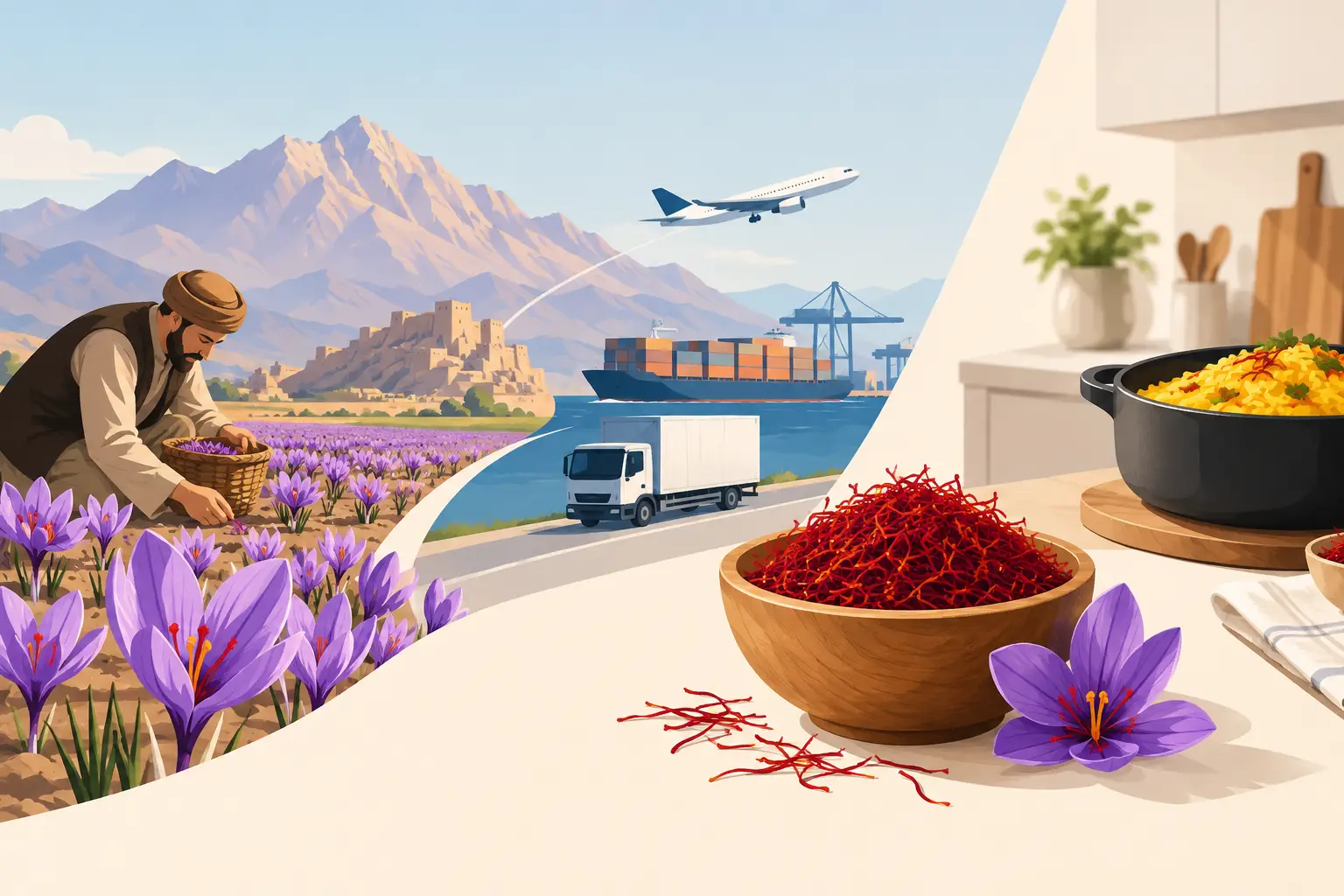
A saffron import example is not simply a shipment of spice moving across borders. It is a chain of decisions that protects aroma, color, purity, and origin from the moment a crocus flower is picked in Herat to the moment its red threads bloom in your rice, tea, or dessert. With saffron, every step matters because the product is light, valuable, and too often misrepresented.
For a buyer in the United States or Canada, the best import story starts well before customs. It starts with a known growing region, experienced farmers, careful handpicking, and a supplier willing to stand behind what is in the package. Afghan saffron from Herat has earned its reputation through that kind of care: vivid red stigmas, a deep honey-like aroma, and remarkable coloring strength.
Imagine a specialty-food business buying Super Negin Grade A+ saffron directly from farming communities in Herat, Afghanistan. The flowers are harvested during the brief autumn bloom, often early in the morning while the petals are still closed. Workers gently separate the crimson stigmas by hand. This is the part of the flower that becomes saffron.
The threads are then naturally dried under controlled conditions. Drying is not a minor detail. Too much heat can flatten saffron’s aroma. Insufficient drying can affect stability during storage and transit. Properly prepared Super Negin threads remain long, red, dry, and exceptionally aromatic, with minimal yellow or white style attached.
Before export, the saffron is sorted and graded. A premium lot should be checked for visible quality, moisture, cleanliness, and consistency. Reputable importers may also request laboratory testing to help verify purity and screen for common forms of adulteration. That can include dyed plant material, added weight from moisture, or threads blended with lower-grade saffron.
Once approved, the saffron is packed in food-safe, light-protective containers. Small retail tins, jars, or sealed pouches are common because saffron does not need a large package to make a culinary impact. For food businesses, saffron may move in larger sealed formats, including bulk quantities intended for repacking or commercial production.
Export documentation is where a beautiful harvest becomes a legitimate commercial product. Exact requirements vary by shipment value, destination, product format, and current regulations, but the basic records must clearly describe what is being transported and where it came from.
A typical commercial shipment includes an invoice, packing list, country-of-origin information, and transportation documents. The importer also needs to correctly classify the goods for customs purposes and meet applicable food-import requirements. In the United States, food businesses must pay attention to Food and Drug Administration rules, facility registration requirements, prior notice procedures, and importer responsibilities where applicable. Canadian importers face their own food safety and labeling obligations.
This is why experienced sourcing matters. The lowest price is not always the lowest-risk choice. A shipment with vague paperwork, unclear origin, or poor labeling can be delayed, refused, or become difficult to sell with confidence. For a premium spice, uncertainty also damages the one thing customers should never have to question: authenticity.
A careful importer works with qualified customs and food-compliance professionals when needed. Regulations can change, and this article is not legal or customs advice. The practical lesson is straightforward: import compliance belongs in the sourcing plan from the beginning, not after the saffron has left Herat.
Saffron is resilient when it is dry and protected, but it does not benefit from careless storage. After customs clearance, the product should be kept away from direct light, humidity, and strong odors. Its aroma is one of its greatest assets, and saffron can lose character if it sits near heat or poorly sealed spices.
Retail packaging should give customers useful information without making unsupported promises. The product name, net weight, origin, ingredient statement, and storage guidance should be easy to find. For buyers seeking true Afghan saffron, “Product of Afghanistan” and a specific Herat origin communicate far more than generic language about premium quality.
At Farmers Saffron, that field-to-kitchen story is central: pure Afghan threads sourced directly from growers and selected for the rich fragrance, color, and flavor that make saffron the Gold of Afghanistan.
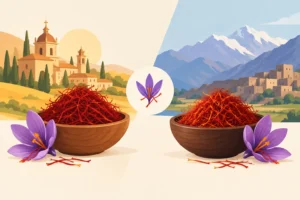
Not all saffron is interchangeable. The country of origin, growing conditions, harvest practices, thread style, and handling standards all influence the final experience in the kitchen. Herat is especially respected for saffron with strong color release and an expressive aroma that brings depth to both sweet and savory dishes.
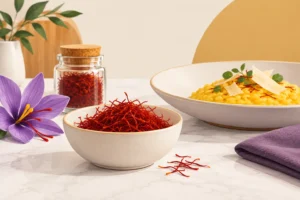
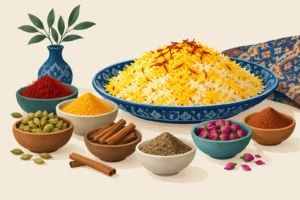
For home cooks, quality means you can use less while getting more from each thread. A small pinch of properly bloomed saffron can turn plain basmati rice golden, give a custard a warm floral finish, or add a luxurious note to chicken, seafood, and tea. Weak saffron often forces the opposite result: more threads, little color, and little fragrance.
For restaurants, bakeries, and food makers, traceability has an additional business value. A known source helps create consistency from batch to batch. It also gives chefs and retailers a real origin story to share, rather than relying on a vague claim printed on a label.
There is a trade-off. Directly sourced, carefully documented saffron may cost more than an anonymous bargain jar. But saffron is purchased in fractions of an ounce, used in pinches, and judged by performance. Strong threads with clear provenance are often the better value per finished dish.
Once saffron reaches a retailer or commercial kitchen, buyers should still look closely. Authenticity is confirmed through more than one signal. Start with the threads themselves: high-quality saffron should be mostly deep red, dry, and distinct. A small amount of natural yellow at the base can occur, but an excessive amount suggests less of the valuable stigma portion.
Then notice the aroma. It should be concentrated and complex, often described as floral, hay-like, warm, or honeyed. It should not smell sugary, artificial, or stale. Finally, test a few threads in warm water. Genuine saffron slowly releases a luminous golden color while the threads largely retain their red appearance. Instant red dye bleeding is a warning sign.
This simple kitchen test is helpful, but it does not replace responsible sourcing and quality controls. The most dependable protection is to buy from a seller that identifies the origin, grade, and thread form clearly and handles saffron as a premium ingredient rather than a commodity.
For a household, small sizes are usually the wisest choice. A 0.5-gram or 1-gram container can last through many meals when stored tightly sealed in a cool, dark cabinet. Larger packs make sense for frequent cooks, gift giving, or families who prepare saffron rice, tea, and desserts regularly.
Commercial buyers must balance unit cost against freshness, cash flow, and demand. A restaurant with a signature saffron dish may benefit from larger quantities. A specialty retailer testing a new category may prefer smaller, more frequent orders. Bulk saffron only creates savings if it remains well stored and sells while its aroma is at its best.
The strongest saffron import example does not end at the border. It continues in the way the threads are stored, labeled, sold, and used. It respects the hands that harvested each flower in Herat and gives the final cook enough confidence to use the spice generously, without wondering what is really in the tin.
Choose saffron with a clear origin, visible quality, and a fragrance that feels alive. Then give it the same care at home: keep it sealed, keep it dark, bloom a few threads gently, and let a small harvest from Afghanistan transform the meal in front of you.