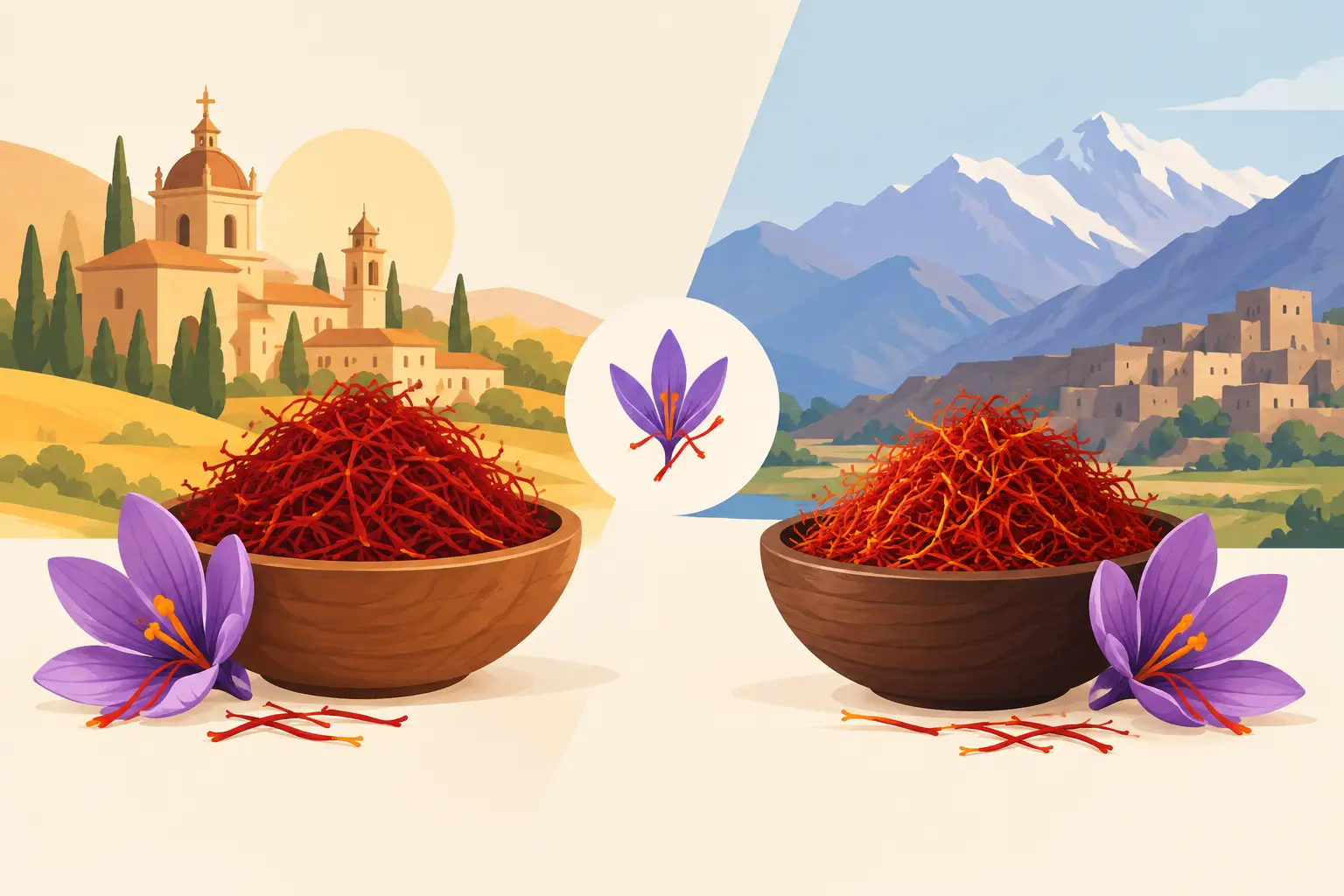
A jar labeled Spanish saffron may carry a famous culinary reputation. A packet of Afghan saffron may offer startling crimson threads and a deep honeyed aroma. In the question of Spanish versus Afghan saffron, the better choice is not decided by country name alone. It comes down to provenance, thread selection, freshness, processing, and whether the seller can stand behind what is in the package.
Saffron is the hand-harvested stigma of the Crocus sativus flower. Each blossom yields only three delicate red threads. That labor makes genuine saffron precious, but it also makes the market vulnerable to weak, old, mixed, or misleading products. For home cooks and professional kitchens alike, clear origin and honest grading matter as much as a beautiful label.
Spain has a long, respected place in saffron cooking. Spanish saffron is closely associated with paella, arroz con leche, seafood stews, and the warm golden color of Iberian cuisine. La Mancha is the best-known Spanish growing region, and saffron carrying the protected La Mancha designation follows defined geographic and production requirements. Its reputation is deserved when the product is genuinely grown, processed, and identified as such.
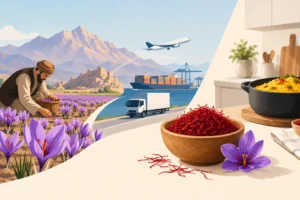
Afghanistan has become one of the world’s most significant saffron-producing origins, with Herat at its center. The region’s dry climate, high-altitude conditions, and generations of careful cultivation support saffron with intense color, a floral aroma, and a rounded bittersweet flavor. For Afghan families, saffron is more than a spice. It is a cultural treasure, a demanding seasonal harvest, and an important source of agricultural livelihood.
Neither origin has a monopoly on excellence. A well-grown, fresh Spanish saffron can be exceptional. So can a carefully selected Afghan saffron. The practical difference is that Afghan saffron, especially from Herat, is often available as long, all-red Super Negin threads with high visual purity and strong culinary performance. That makes it especially appealing to cooks who want to see exactly what they are buying.
“Spanish saffron” does not always mean the saffron was grown in Spain. Spain has historically been a major saffron trading, processing, and packing center. In some cases, saffron from another origin may be packed or sold through Spain. That does not automatically make it poor quality, but it does mean shoppers should read beyond the front label.
Look for a named growing region, a harvest origin, and a seller that answers direct questions about sourcing. If a product claims La Mancha provenance, it should provide clear supporting identification. If it is simply called Spanish style, Spanish packed, or Spanish saffron without further detail, its agricultural origin may be less clear.
The same standard applies to Afghan saffron. “Afghan” is meaningful only when it is backed by traceable sourcing. Herat origin, direct farmer relationships, handpicked harvesting, and careful natural processing give the claim substance. At Farmers Saffron, the focus is single-origin Super Negin saffron from Herat, selected to carry the journey from Afghan fields to the kitchen without unnecessary middlemen.
Spanish saffron is commonly sold in different commercial cuts and categories. You may see terms such as Coupe, Mancha, or Superior, though naming practices and definitions can vary by seller. Some products include more yellow style or floral material than others. Yellow portions are not harmful, but they do not deliver the same concentrated color and aroma as the red stigma.
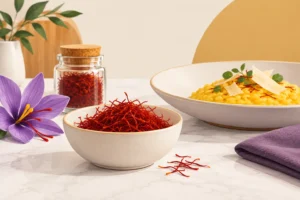
Afghan Super Negin is a trade grade known for long, thick, uniformly red stigmas with little to no yellow style attached. The threads should look dry, separate, and naturally trumpet-shaped at one end rather than chopped into tiny fragments. Their visual appeal is not merely decorative. More red stigma means more of the part of the flower that brings saffron’s signature color, fragrance, and flavor.
Still, thread length alone is not a full quality test. Very long threads can be old, poorly stored, or low in potency. Conversely, a slightly shorter thread from a fresh harvest can perform beautifully. Think of Super Negin as a useful sign of careful selection, not a substitute for origin, freshness, and purity.
Many shoppers expect the darkest red saffron to be the strongest. Deep red is desirable, but appearance should be assessed with aroma and infusion. Genuine saffron has a dry, sweet-hay scent with floral and honey-like notes. It should not smell sugary, dusty, perfumed, or artificially sharp.
When steeped in warm water, crushed ice, or a small amount of hot liquid, authentic threads release their golden color gradually. They do not instantly turn the water neon red. The threads should retain their red form for a while rather than dissolve or lose all color immediately. This simple kitchen check cannot replace laboratory testing, but it can help reveal obvious quality problems.
Spanish and Afghan saffron can both bring a luminous golden hue to rice, sauces, broths, breads, and desserts. The distinction is often most noticeable in the aroma. Quality Spanish saffron is frequently prized for a balanced, savory-sweet profile that feels at home in traditional Spanish dishes. High-grade Afghan saffron from Herat is often notably aromatic, with floral sweetness, hay-like warmth, and a clean, gently bitter finish.
These descriptions are tendencies, not fixed rules. Soil, weather, harvest timing, drying technique, storage, and age all shape the final spice. A fresh, carefully dried saffron from either country will taste more expressive than an old saffron from a more famous origin.
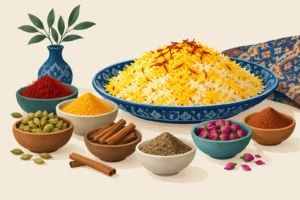
For everyday cooking, use the saffron that suits your dish and your expectations. Afghan Super Negin is a natural choice for Persian rice, Afghan pulao, tea, custards, saffron milk cake, seafood, and celebratory sweets. It also performs beautifully in paella. Spanish saffron belongs in those same dishes when its provenance and freshness are trustworthy. Saffron has traveled across cuisines for centuries. The kitchen is more flexible than the label suggests.
Saffron quality is often discussed through three naturally occurring compounds: crocin for color, picrocrocin for flavor, and safranal for aroma. Laboratory standards can measure these characteristics, but shoppers rarely need to memorize technical scores. What matters is whether a supplier uses credible quality controls and avoids vague claims that cannot be verified.
Be cautious with bargain prices, powdered saffron, and packages that do not disclose origin. Powder is convenient, yet it is far harder to inspect and easier to adulterate with turmeric, paprika, dyed fibers, or other fillers. Whole threads offer a clearer view of what you are purchasing.
A trustworthy package should contain mostly red stigmas, smell naturally aromatic, and state the net weight clearly. It should also protect the threads from light and moisture. Saffron is potent, but it is not indestructible. Heat, sunlight, humidity, and repeated exposure to air slowly flatten its character.
Choose Spanish saffron when you have found a supplier with transparent Spanish origin, reliable freshness, and a profile you enjoy. It is a strong choice for cooks who value regional Spanish tradition or are specifically seeking saffron from La Mancha.
Choose Afghan saffron when you want vivid, all-red Super Negin threads, powerful aroma, and direct connection to Herat’s saffron-growing heritage. It is particularly compelling when the supplier can trace it to farmers and explain how it was selected, dried, and packed.
For restaurants, bakeries, and food makers, consistency may matter most. Ask for lot information, grades, bulk availability, and documentation that supports the product’s origin and purity. For home cooks, a small package of premium threads is usually enough to make several memorable meals. Saffron is used by the pinch, not the spoonful.
Do not drop dry saffron threads straight into a large pot and hope for the best. Gently crush a pinch between your fingers or with a mortar and pestle, then bloom it for 10 to 20 minutes in a few tablespoons of warm water, hot broth, or melted ice. Add the liquid and threads near the end of cooking. This draws out the color and fragrance more evenly, so a small amount reaches the entire dish.
Store the remaining threads in a tightly sealed container in a cool, dark cupboard. Avoid the refrigerator unless the container is fully moisture-proof, since condensation can damage the spice. Buy an amount you will use within a reasonable time, then replenish it for the next celebration, recipe, or gift-worthy meal.
The finest saffron does not need a dramatic introduction. Give it a little time to bloom, pair it with ingredients that let its aroma speak, and let its golden color tell the story of the field it came from.