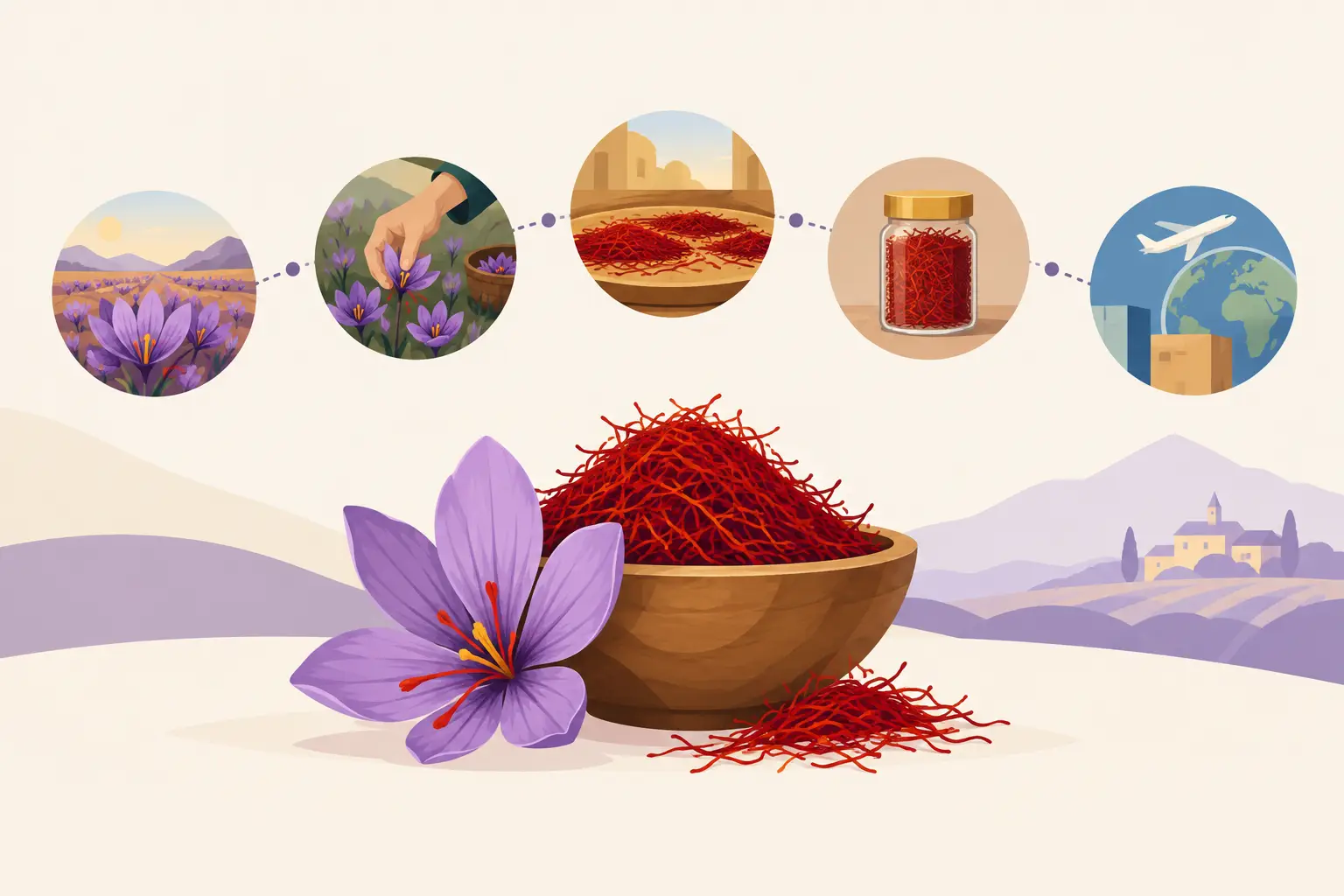
A saffron thread is small, but the story behind it should never be vague. Saffron traceability gives buyers a clear view of where their saffron began, who handled it, and how it reached the jar in their kitchen. For a spice valued by the gram, that clarity is not a luxury. It is one of the best protections against weak aroma, mixed material, unclear origin, and imitation products.
Real saffron carries the character of its growing region. The soil, climate, harvest practices, drying method, and care taken after picking all shape its color, fragrance, and flavor. When those details disappear somewhere between farm and shelf, shoppers are left to judge quality by a label alone. Traceability restores the connection.
Traceability is the ability to follow saffron through its supply chain, from the crocus field to the finished package. At its best, it identifies the country and region of origin, the farming community or producer group, the harvest period, the handling and drying process, and the route through packing and distribution.
This does not mean every package must name an individual farmer. Supply chains can involve many small farms, particularly during harvest season. It means the seller can confidently explain where its saffron comes from and maintain a consistent record of how it was sourced and handled.
For Afghan saffron, regional specificity matters. Herat is recognized for producing deeply aromatic, richly colored saffron with long red stigmas. Saying “product of Afghanistan” is helpful, but knowing the saffron was grown in Herat offers a more meaningful picture of its provenance. It connects the spice to a place with generations of cultivation knowledge.
Traceability also creates accountability. If a batch does not meet expected standards for appearance, aroma, or purity, a documented supply chain makes it easier to identify where the issue arose. That supports better quality control before the saffron ever reaches a home cook, bakery, restaurant, or specialty retailer.
Saffron is one of the world’s most valuable culinary ingredients, which makes it especially vulnerable to substitution and misleading descriptions. Ground saffron is the hardest format to evaluate because its threads are no longer visible. Even whole threads can be blended with lower-grade material or sold with little information about origin.
Traceable sourcing gives you more than a country name. It gives you a reason to trust the ingredient you are blooming in warm water for rice, steeping for tea, folding into cake batter, or adding to a celebratory dish. You should be able to expect a clean, honeyed aroma, vivid golden color, and the subtle floral-earthy flavor that makes saffron distinct.
It also helps you buy the right quantity with confidence. A small 0.5-gram jar can bring remarkable flavor and color to many home recipes when the threads are potent and properly stored. Commercial buyers need that same confidence at a larger scale. A restaurant, caterer, or food maker cannot build a signature dish around saffron that changes dramatically from one delivery to the next.
There is a practical limit, of course. Traceability does not replace your senses. Even well-documented saffron should be examined when you open it. Look for predominantly deep red threads, a dry texture, and a warm, complex fragrance. Orange or yellow style ends can occur naturally, but a package dominated by pale strands deserves a closer look. A trustworthy source pairs documented origin with saffron that performs beautifully in the cup and on the plate.
The saffron harvest is brief and highly manual. Crocus flowers must be gathered at the right time, then carefully opened so the delicate red stigmas can be separated. Each flower yields only a few threads. This is why authentic saffron reflects so much patient work before it ever becomes a pantry staple.
The handling that follows is just as important. The stigmas must be dried with care to preserve their essential aroma, color strength, and structure. Excess moisture can compromise storage. Rough processing can break threads and diminish visual quality. Poor sorting can leave too much yellow or orange material among the prized red stigmas.
A traceable supply chain should respect that work rather than reduce saffron to a generic commodity. Direct relationships with growers and producer communities make it easier to set clear expectations for harvesting, sorting, grading, and packing. They also reduce the number of handoffs where origin information and quality oversight can be lost.
At Farmers Saffron, the focus is direct sourcing from Afghan farmers and a clear Herat-to-table journey. That approach supports Super Negin Grade A+ saffron chosen for long, vivid threads, powerful aroma, and natural color. The goal is simple: pure Afghan saffron that honors both the people who cultivate it and the people who cook with it.
A beautiful package is not proof of origin. Before purchasing, ask whether the seller identifies the saffron’s country and region, explains its grade, and can describe how it is sourced. Clear answers are a good sign. Broad phrases such as “premium quality” or “imported saffron” may be true, but they do not tell you enough on their own.
It is also worth asking how the saffron is packaged and stored. Light, heat, humidity, and air gradually weaken saffron’s aromatic compounds. Quality threads should arrive in packaging that protects them from these elements, then be moved to a tightly sealed container at home. Keep the container in a cool, dark cabinet, away from the steam and heat of the stove.
For wholesale purchasing, traceability should be part of the conversation from the start. Buyers may need consistency across repeated orders, documentation for their own customers, dependable lead times, and a grade that matches their application. A bakery using saffron in enriched dough has different needs from a retailer building gift assortments, while a restaurant may prioritize reliable color and aroma across a seasonal menu.
Price deserves context, too. Exceptionally low-priced saffron can be tempting, but it may reflect lower potency, mixed grades, unclear handling, or a supply chain with little accountability. The right choice depends on how you plan to use it. For a special paella, Persian rice, saffron milk cake, or fragrant tea, carefully sourced whole threads offer much more value than a larger amount of saffron with uncertain strength.
When buyers know where their saffron comes from, the people behind the harvest become visible. Saffron farming supports rural households, seasonal labor, and agricultural knowledge that has been passed through communities over many years. A direct, transparent sourcing model can help preserve that connection rather than bury it beneath layers of anonymous trading.
Ethical sourcing should not be treated as a decorative claim. It is reflected in sustained relationships, fair dealing, respect for harvest labor, and a commitment to purchasing saffron that meets agreed quality standards. The details may differ from one producer relationship to another, but the principle remains the same: provenance has value because people have value.
For shoppers, choosing traceable saffron is a way to bring greater intention to an everyday act of cooking. The threads may be used sparingly, but their journey is substantial. A pinch can color a pot of rice, perfume a custard, or turn a simple cup of tea into a ritual.
The next time you open a jar of saffron, pause before you bloom the threads. Look for the deep red color, breathe in the warm aroma, and ask whether you know its path. The best saffron does more than transform a dish. It lets you taste the care of its origin.