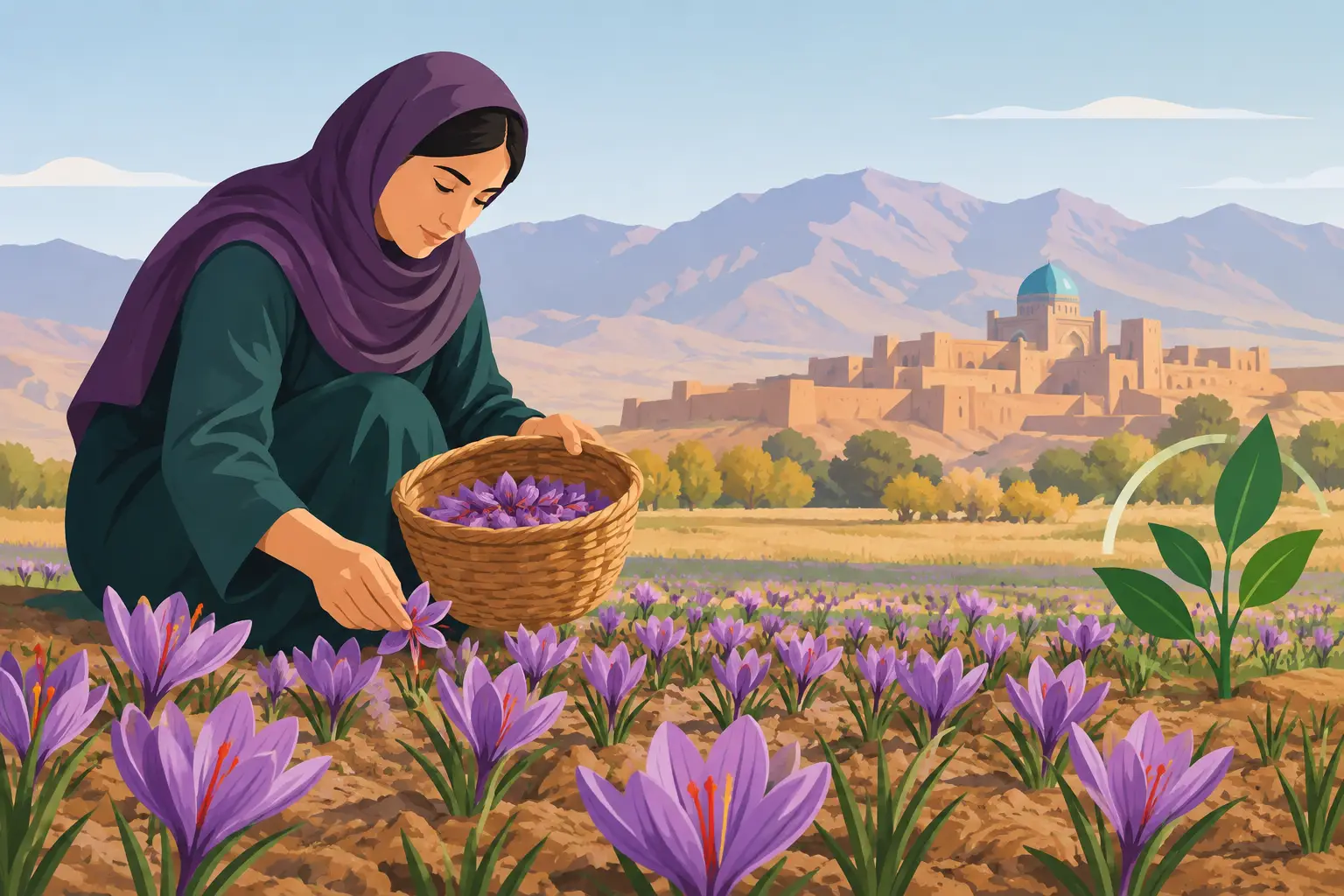
A single gram of saffron represents an extraordinary amount of human care. Each delicate red stigma is handpicked from a crocus flower, separated with precision, and dried to preserve its color, aroma, and flavor. That is why saffron sustainability cannot be reduced to a label on a package. It begins with how the crop is grown, who benefits from its value, and whether the finished threads respect the work behind every harvest.
For Afghan saffron, Herat is central to that story. The region’s dry climate, skilled growers, and generations of cultivation knowledge produce saffron known for deep red color, a rich floral aroma, and concentrated flavor. When shoppers choose authentic, single-origin threads with a clear path from farm to kitchen, they support a food system built on craft rather than commodity shortcuts.
Sustainability has environmental, economic, and cultural dimensions. For a high-value crop such as saffron, all three matter. A saffron supply chain can use relatively little land while still placing enormous demands on growers’ time and skill. It can preserve agricultural traditions while leaving farmers vulnerable if too much of the final value is captured by middlemen.
Saffron sustainability means looking beyond the finished jar. It asks whether farmers receive a fairer share for their crop, whether the product’s origin is known, whether processing protects quality without unnecessary additives, and whether consumers are buying real saffron rather than a diluted substitute.
Purity matters here. Adulterated saffron wastes the customer’s money, but it also undercuts producers who have invested months of care in a genuine harvest. Clear provenance and direct sourcing help protect both the buyer and the farming community.
Saffron crocus is a crop with specific needs. It generally thrives in sunny, dry conditions and does not require the flooded fields associated with crops such as rice. In regions where water must be managed carefully, that can be a meaningful advantage. Herat’s climate has long suited the crop, allowing skilled growers to cultivate saffron in an environment aligned with its natural growing preferences.
That does not mean saffron is automatically low-impact in every setting. Water use depends on local rainfall, irrigation practices, soil conditions, and farm management. Climate shifts can also affect flowering schedules and yields. Responsible sourcing should avoid simplistic claims and instead recognize that good growing practices are local. What works in Herat may not be identical to what works elsewhere.
The crop’s value is also concentrated in a small, precious part of the flower. Only the three red stigmas are saffron. The blossom must be harvested during a short seasonal window, often in the early morning, before the flowers fully open. This is careful work, not industrial-scale extraction.
Hand harvesting is sometimes described as a luxury detail. It is more than that. The human touch allows workers to handle fragile flowers carefully and separate the red threads from the yellow styles and purple petals. Proper separation supports the vivid appearance and clean flavor expected from Super Negin Grade A+ saffron.
The trade-off is clear: handpicked saffron takes time and labor, so authentic threads cost more than low-grade powder or suspiciously cheap blends. Yet that price reflects the crop’s real value. A small amount of potent, pure saffron can flavor a full dish, a pot of tea, or a tray of baked goods. Buying fewer, better threads is often the more sensible choice.
The path from field to kitchen can become crowded quickly. Every additional layer between grower and customer can make origin harder to verify and reduce the share returning to the people who cultivated the crop. Direct relationships are not a magic solution to every agricultural challenge, but they create a stronger foundation for accountability.
When a seller works closely with farmers, it becomes easier to discuss harvest standards, drying methods, storage, grading, and seasonal variation. It also makes the story of the saffron more honest. Saffron is agricultural, not factory-made. One season may bring a slightly different aroma or thread size than another, while still delivering exceptional quality.
At Farmers Saffron, direct sourcing from Afghan farmers helps keep the connection visible. The goal is simple: bring pure, authentic Herat saffron to customers while recognizing the hands and heritage behind it. Removing unnecessary middlemen can help preserve value for farming communities and give buyers more confidence in what they are bringing home.
Sustainable buying also means using what you purchase well. Saffron is too valuable to disappear into a pantry drawer or be used without preparation. High-quality threads should have a strong aroma, predominantly red color, and enough potency that a small pinch goes a long way.
For many recipes, blooming the threads first is the best approach. Gently crush a pinch between your fingers or with a mortar and pestle, then steep it in a few tablespoons of warm water, milk, or broth for 10 to 20 minutes. Add the golden liquid and threads to rice, sauces, tea, custards, or dough. This draws out saffron’s color and fragrance more effectively than dropping dry threads into a large pot at the last minute.
Store saffron in an airtight container in a cool, dark place, away from humidity and direct sunlight. Avoid keeping it beside the stove, where heat and steam can weaken its aroma. Good storage protects your investment and prevents unnecessary waste.
Whole saffron threads are usually the clearest choice for shoppers who care about authenticity. You can see their color, shape, and condition before using them. Powder can be convenient, but it is harder to inspect and easier to dilute with other materials. If you buy powder, source it from a supplier that can clearly explain its origin and processing.
This does not mean every powdered product is poor quality. It means the buyer needs more assurance. For a premium ingredient, transparency should be part of the purchase, not an afterthought.
Saffron carries more than flavor. Across Afghan kitchens, it brings color and fragrance to rice, sweets, tea, and celebratory dishes. It is part of hospitality, memory, and regional identity. Supporting authentic Afghan saffron helps keep that culinary heritage visible in markets that often treat spices as interchangeable commodities.
Cultural sustainability also means resisting the urge to separate food from the people who make it. The best saffron is not simply red threads in a glass jar. It is the result of growers’ knowledge: when to harvest, how to dry, how to sort, and how to preserve the qualities that make Herat saffron distinctive.
For diaspora households, cooking with Afghan saffron can be a tangible connection to home. For curious home cooks, it is an invitation to use an ingredient with a real place, history, and community behind it. Both uses matter.
A responsible saffron purchase begins with a few practical questions. Is the origin clearly stated? Are you buying whole red threads? Does the seller explain the grade, handling, and storage? Is the price realistic for genuine saffron, or does it seem too low to reflect hand harvesting?
Look for a supplier willing to be specific. “Premium saffron” alone says very little. Herat origin, Super Negin grading, handpicked threads, and direct farmer sourcing provide more meaningful details. For restaurants, bakeries, and other commercial buyers, consistent lots and reliable bulk sourcing are equally important. Sustainability depends on long-term purchasing relationships, not one-time promises.
Use the amount you need, store it properly, and let the ingredient do its work. A few well-bloomed threads can transform a dish with honeyed floral notes, warm earthiness, and luminous color.
The most helpful choice is often the most informed one: buy authentic saffron with a known origin, treat it with care, and let every thread honor the field where it began.