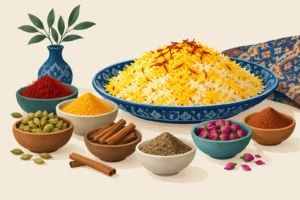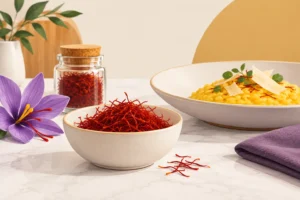
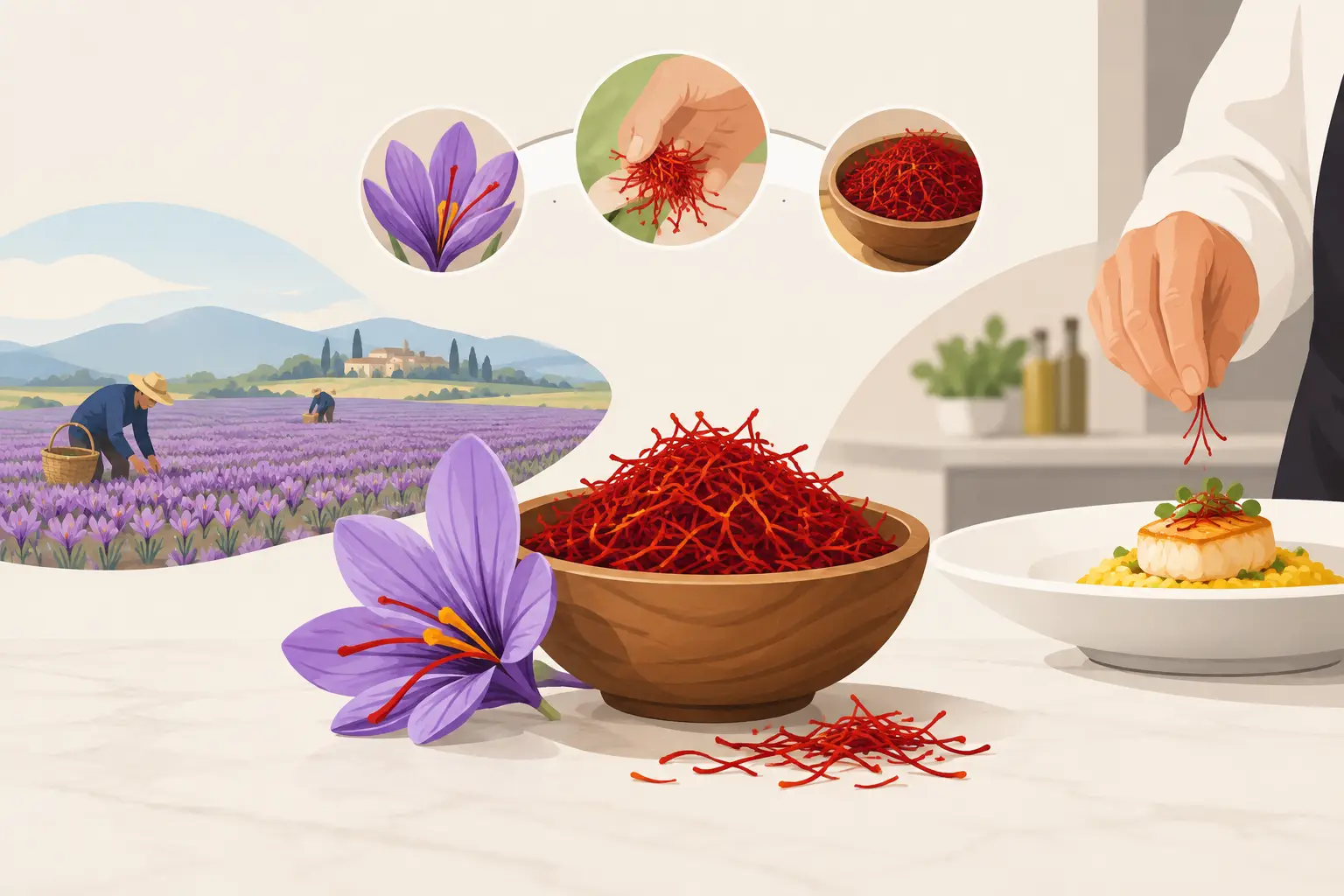
A saffron dish can fail before it reaches the stove. Restaurant saffron sourcing determines whether a risotto carries deep golden color, whether a pastry releases a warm floral aroma, and whether the kitchen gets the same result on Friday night that it achieved during menu testing. With saffron, the lowest price often becomes the most expensive choice.
This is a spice bought by the gram, used by the pinch, and judged immediately by guests. A weak or adulterated lot can flatten a signature dish, increase food cost, and leave cooks compensating with more threads than the recipe was designed to use. A clear sourcing standard protects flavor, consistency, and the story behind the plate.
Saffron is the hand-harvested stigma of the Crocus sativus flower. Every thread represents careful labor, and growing region affects its character. For restaurants, origin should be specific, not a vague country label or a broad claim of “premium quality.” Ask where the saffron was grown, who handled it after harvest, and whether the supplier can explain the route from field to kitchen.
Herat, Afghanistan, is respected for saffron with vivid red threads, concentrated color, and an unmistakably honeyed, hay-like fragrance. The region’s saffron heritage is built on skilled farming and meticulous handpicking. When a supplier works directly with growers, it can provide more than a location on a label. It can offer accountability for the harvest, processing, and selection of the threads.
That traceability matters because saffron has long been vulnerable to substitution and dilution. Powdered saffron can be especially difficult to assess, since added colorants or fillers are easier to hide. Whole threads give chefs a better first view of what they are buying. They also preserve the ingredient’s aroma longer when stored correctly.
Restaurants often encounter labels such as Negin, Super Negin, Sargol, or Grade A. These names can help describe thread style and selection, but they are not a universal guarantee. A grade label without a reliable origin, a current lot, and a supplier willing to stand behind its product is only a label.
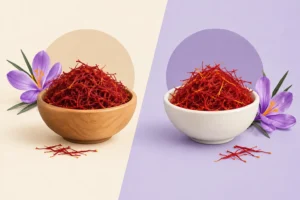
Super Negin saffron is valued for its long, uniform red stigmas and minimal yellow or white style. For a chef, that presentation is practical as well as beautiful. Clean red threads make dosing easier and signal careful separation during processing. Grade A+ Super Negin should offer a rich aroma before it even reaches liquid, then release strong color gradually rather than staining water instantly with an artificial-looking red.
Color strength matters, but it should not be treated as the only buying criterion. A lot may look dark and still lack the aromatic complexity needed for delicate dishes. Conversely, a fragrant saffron with natural variation in thread shape may perform beautifully in a braise or dessert. The right standard depends on your menu, but purity, aroma, and consistency should always sit beside appearance.
A good supplier should answer direct questions about country and region of origin, harvest practices, processing, lot consistency, and storage. For higher-volume purchasing, ask whether analytical testing is available for color, aroma, flavor, moisture, and purity indicators. The exact documentation required depends on the size of your operation and purchasing policies, but transparency should never feel like an unreasonable request.
Be cautious with claims that sound absolute but reveal little. “Best quality,” “pure imported saffron,” and “restaurant grade” do not identify a farm region, thread type, or quality-control process. Specificity is more useful than superlatives.
Saffron is a high-value ingredient, so procurement teams naturally compare price per gram. That comparison is necessary, but it is incomplete. A potent saffron may require fewer threads per portion than a cheaper product with weak aroma and color. The relevant number is the cost of a consistently flavored dish, not simply the cost of a jar.
Begin with a controlled kitchen trial. Use the same recipe, the same steeping method, and measured quantities from each sample. Record the color in the finished dish, the aroma, the flavor persistence, and the number of portions produced. Do not judge saffron only by dry appearance or by how quickly it colors a glass of water.
For many preparations, chefs get the best extraction by gently crushing threads and blooming them in warm water, stock, milk, or another suitable liquid before adding them to the dish. Excessive heat can mute aroma, while under-extraction leaves value in the threads. Your supplier should be able to offer practical handling guidance, not just a product specification.
A restaurant serving occasional saffron specials may be better served by smaller, frequently replenished packs. A bakery, caterer, Persian or South Asian restaurant, or food manufacturer with predictable demand may benefit from bulk purchasing. Bulk makes financial sense only when storage and turnover protect freshness. Buying far beyond expected use can turn a quality ingredient into a stale inventory problem.
Saffron quality can change through poor handling after purchase, even when the original harvest was excellent. Set a simple receiving process so staff know what to inspect when a shipment arrives. Packaging should be sealed, dry, clearly labeled, and protected from light. The threads should appear predominantly red, feel dry rather than soft or damp, and carry a distinct natural fragrance.
The aroma is one of the most revealing checks. Authentic saffron smells complex: floral, warm, slightly sweet, and earthy. It should not smell musty, sharply chemical, or like artificial perfume. Visual checks also help. Excess yellow style, broken fragments, dust, or unusually uniform powder deserve questions, especially if they do not match the sample approved by the chef.
Keep a retained sample from each larger lot when saffron is central to your menu. This supports consistency checks if a new delivery performs differently. It also gives the culinary team a practical reference point when adjusting recipes, training new staff, or investigating an unexpected change in color or flavor.
The purchasing decision is not complete until the saffron has a safe home in the kitchen. Light, heat, humidity, and air steadily reduce its character. Store threads in an airtight container in a cool, dark, dry cabinet, away from steam lines, ovens, dishwashers, and strongly scented spices.
Avoid leaving saffron in a clear container on an open shelf simply because its red threads look striking. Display may be tempting, but protection preserves value. Label containers with the received date and lot information, and use first-in, first-out rotation. Keep only the working quantity near the line while the main supply stays sealed.
Saffron does not need to be treated as fragile, but it deserves respect. A chef who measures accurately, blooms thoughtfully, and stores carefully can make a small amount carry remarkable presence through a dish.
The right saffron partner does more than sell a luxury spice. It understands that restaurants need repeatable quality, dependable pack sizes, and honest communication when volumes or harvest conditions change. A direct relationship with farmers can reduce unnecessary middlemen and make the supply chain easier to explain to guests who ask where an ingredient comes from.
For restaurants seeking Afghan saffron, Farmers Saffron offers direct-from-Herat Super Negin Grade A+ threads selected for purity, color, and aroma. That field-to-kitchen connection matters when saffron is not a garnish, but a defining note in your food.
Treat saffron as a menu ingredient with a provenance, not as a mysterious red thread purchased at the last minute. When the origin is clear and the aroma is alive, even a small pinch can give guests something they remember.