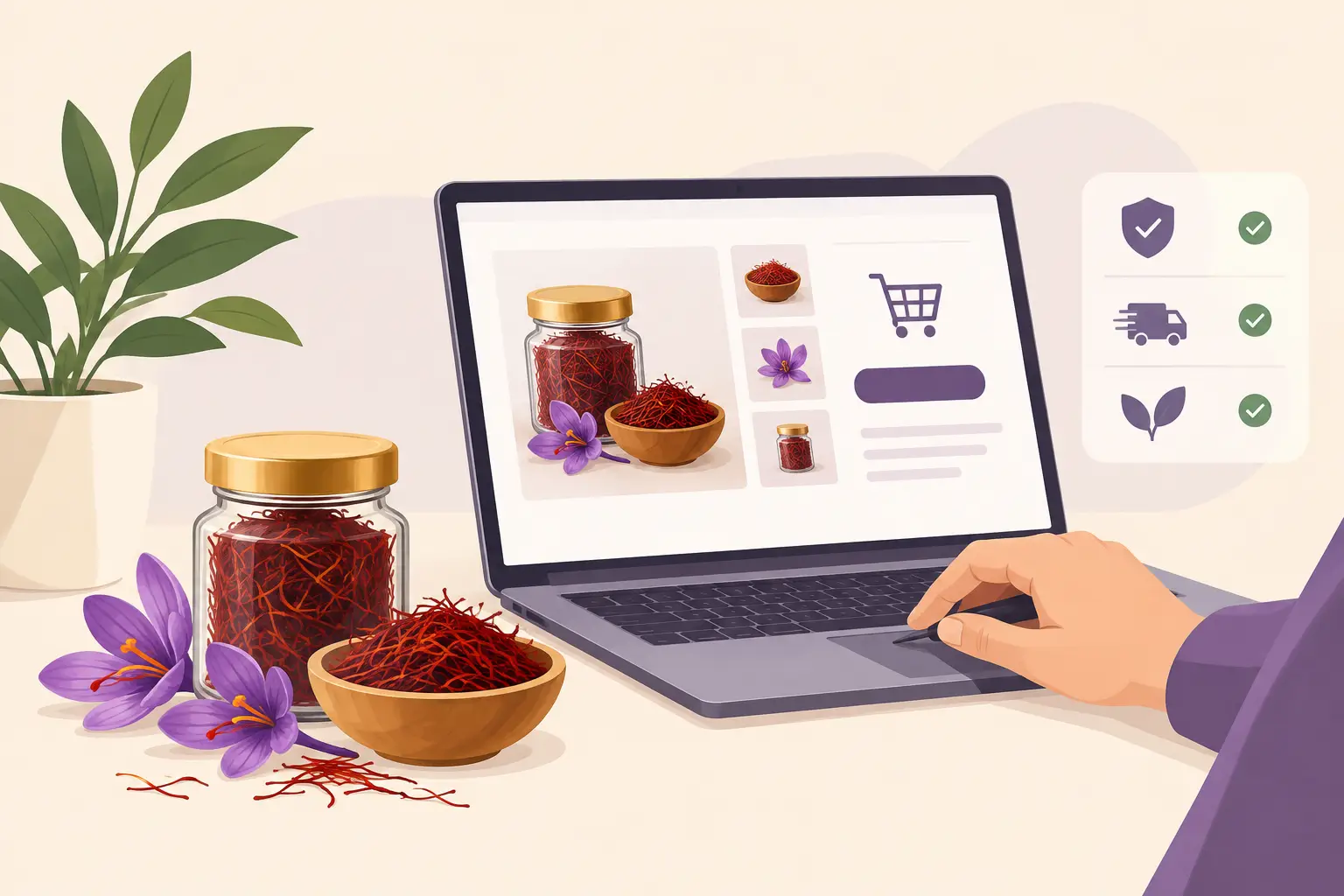
A small pinch should perfume an entire pot of rice, tint a custard a luminous gold, and bring a warm honeyed aroma to tea. If it does not, the problem is rarely your recipe. When you buy saffron online, the real decision is not simply finding the lowest price. It is choosing threads with a clear origin, honest grade, and the strength to earn their place in your kitchen.
Saffron is one of the world’s most valuable spices because every thread is the handpicked stigma of a crocus flower. Harvesting is brief, delicate, and labor-intensive. That value also makes saffron vulnerable to weak lots, unclear sourcing, and adulteration. A good online purchase begins with knowing what authentic saffron should look, smell, and cook like.
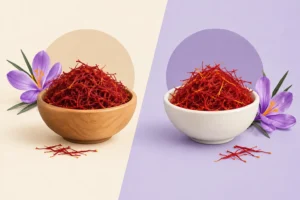
Start with the threads themselves. Premium saffron should be mostly deep crimson red, with a dry, clean appearance and trumpet-shaped ends. A small amount of yellow or orange near the base can occur naturally, but a package filled with pale yellow styles or broken fragments is not the same as a high-grade thread selection.
Color matters, but do not mistake darkness alone for quality. Good saffron releases a rich golden color slowly when steeped in warm water or ice. It should not bleed an artificial red immediately, nor should it turn the water bright scarlet in seconds. The infusion should look golden-orange and smell floral, warm, and slightly earthy.
Aroma is often the clearer signal. Fresh, authentic threads have a distinct fragrance that can feel like hay, honey, dried flowers, and warm spice at once. They should never smell musty, sugary, oily, or like artificial perfume. Saffron tastes subtly bitter before it opens in a dish. It is not sweet, despite the sweetness people often associate with its aroma.
Saffron is not a generic pantry product. Place matters. Soil, climate, harvesting practice, and drying all shape its character. A retailer should be able to tell you where the saffron was grown and how it was handled after harvest.
Herat, Afghanistan, is respected for producing intensely aromatic saffron with beautiful color strength. Its dry climate and generations of cultivation have made the region a true saffron-growing heritage. When a seller gives only broad language such as “imported” or “premium international saffron,” you are being asked to accept too much uncertainty for a high-value spice.
Clear provenance also supports a more responsible purchase. Direct farmer relationships create a shorter path from field to kitchen and give buyers a better understanding of the ingredient behind each jar or pouch.
Grade labels can be useful, but only when paired with transparent sourcing and quality standards. Super Negin is widely valued because it features long, vivid red stigmas with minimal yellow material. It is chosen by cooks who want strong aroma, color, and visual beauty in every pinch.
That does not mean every recipe requires the largest or longest threads. A rice dish, Persian-style ice cream, saffron tea, or a bakery filling all benefit from potent saffron, but the right purchase depends on how often you use it and how carefully it has been stored. Grade is a helpful starting point, not a substitute for freshness and traceability.
Ground saffron is convenient, but it is harder to evaluate before it reaches your kitchen. Powder can lose aroma more quickly and is easier to mix with other materials. Whole threads let you see their color, shape, and consistency. They also give you more control over preparation.
For the fullest flavor, lightly crush the threads between your fingers or in a small mortar, then bloom them in a few tablespoons of hot, not boiling, water for 10 to 20 minutes. Some cooks use a few ice cubes instead, allowing the saffron to bloom slowly as the ice melts. Either method helps distribute saffron’s color and aroma evenly through rice, broth, dough, milk, and tea.
There is a practical trade-off. Powder may suit a busy commercial kitchen with a carefully vetted supplier and established handling procedures. For most home cooks, whole threads offer more confidence, better shelf stability, and a more visible sign of what they are buying.
Saffron’s enemies are light, heat, moisture, and air. A seller should package threads in a sealed container that protects them during shipping and makes storage easy once they arrive. Glass jars, metal tins, or well-sealed pouches can all work when kept away from direct sunlight and heat.
Avoid buying a large amount just because the per-gram price is lower if you only cook with saffron a few times a year. A 0.5-gram or 1-gram package is often enough for first-time buyers and occasional cooks. A 2-gram to 5-gram size can make more sense for frequent cooking, holiday baking, entertaining, or gifting. Restaurants, caterers, specialty retailers, and food makers may need a bulk format, but they should also confirm lot consistency, storage conditions, and supply reliability.
Once opened, keep saffron tightly sealed in a cool, dark cupboard. Do not store it beside the stove, above the dishwasher, or in a clear jar on a sunny shelf. Refrigeration is not usually necessary and can introduce moisture if the container is opened often. Stored properly, premium threads retain their best character for a long time, though aroma naturally softens with age.
A trustworthy product page should answer the questions that affect your food: What is the country and region of origin? Is it sold as whole threads? What grade is it? How much saffron is in the package? How should it be stored? Is it suited to home use, gifting, or bulk food production?
Price deserves context. Genuine saffron cannot be priced like paprika or turmeric because it is harvested by hand in tiny quantities. An unusually cheap offer may be old, low-grade, mixed with yellow styles, or simply unclear in weight. Compare the price per gram only after you have compared origin, grade, thread quality, and package size.
Customer reviews can help, especially when they mention aroma, color release, and repeat purchases. Still, a detailed description and visible sourcing standards matter more than vague praise. You want evidence that the seller understands saffron beyond its luxury reputation.
Farmers Saffron focuses on Super Negin Grade A+ threads sourced directly from farming communities in Herat, Afghanistan. That field-to-kitchen approach matters because it keeps the origin clear and the product centered on purity, careful handpicking, natural processing, and fragrance that belongs in the food you make.
Your first use should be a small, focused test rather than a large recipe with many competing flavors. Crush a few threads, bloom them, and add the liquid to plain basmati rice, warm milk, or a simple cup of tea. Notice whether the color develops gradually and whether the aroma stays present after heating.
Do not judge saffron only by how dramatically it colors a dish. Strong yellow-gold color is desirable, but true quality is the balance of color, fragrance, and flavor. A saffron that makes rice bright but contributes no aroma is not giving you the full experience.
For savory cooking, saffron pairs naturally with rice, chicken, seafood, lentils, broths, and tomato-based dishes. In sweets, it brings depth to custards, shortbread, cakes, ice cream, and milk desserts. It also makes an elegant gift because one small jar invites many meals, from a weekday tea to a celebration table.
The best saffron purchase should feel clear before it feels expensive. Choose vivid whole threads, a named origin, an honest grade, protective packaging, and a quantity you will use while it is at its most aromatic. Then give those threads a little time to bloom. From Herat to your table, that patience is where saffron shows its gold.