
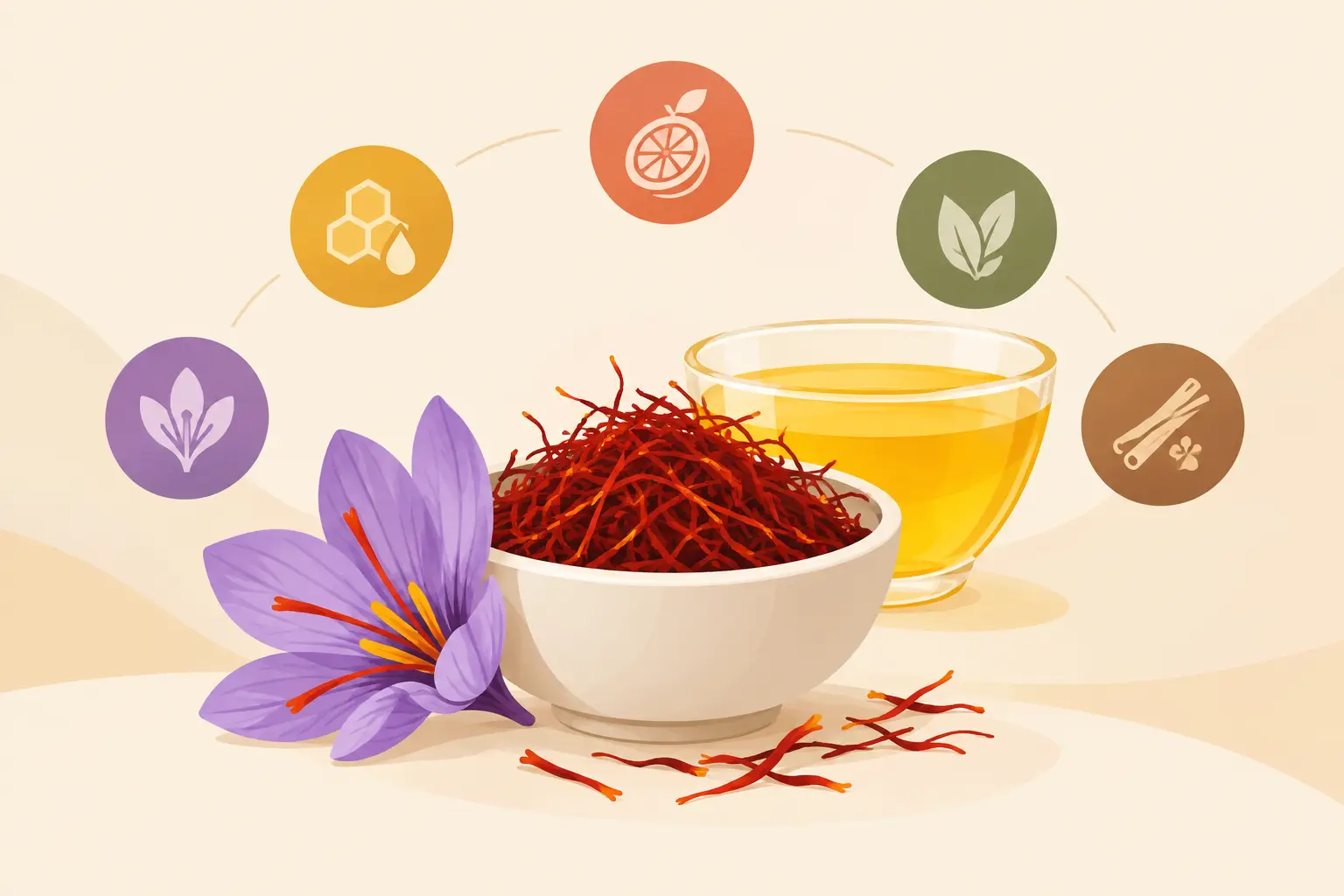
A pinch of real saffron can change an entire pot of rice before the first spoonful reaches the table. The saffron flavor profile is not simply sweet, floral, or earthy. It is a layered experience: warm hay, delicate honey, dried flowers, a gentle mineral note, and a faint bitterness that keeps the aroma refined rather than sugary.
That complexity is why saffron has earned its place in treasured dishes from Afghan kitchens to Spanish paella pans, Persian rice pots, Indian desserts, and Scandinavian breads. Pure saffron does not shout. It unfolds slowly, bringing golden color and an aroma that feels both bright and deeply comforting.
The first aroma of high-quality saffron is often compared to honey and wildflowers, but that description tells only part of the story. Fresh, properly dried threads also carry a clean hay-like warmth. Think of sun-dried grass, warm tea, and a trace of earth after rain. There may be a subtle medicinal or mineral edge as well, especially when you smell the threads directly.
On the palate, saffron is more restrained than its aroma suggests. It has gentle sweetness, floral lift, and a slightly bitter finish. That bitterness is normal. In fact, it is part of what gives saffron distinction. A dish flavored with authentic saffron should taste fragrant and rounded, not aggressively bitter, perfumed, or artificial.
Its golden color creates another expectation: many people assume saffron will taste rich and buttery. It can make food feel luxurious, but it does not taste like butter or sugar. Instead, it adds brightness and depth. In a rice dish, it makes each grain more aromatic. In a custard, it brings floral warmth that balances dairy and sweetness. In tea, it offers a calm, lightly honeyed character.
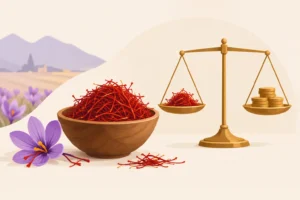
Saffron flavor begins in the field. Each thread is the handpicked red stigma of the Crocus sativus flower. The soil, climate, harvest timing, separation process, and drying method all affect the finished spice.
Herat, Afghanistan, is known for saffron with powerful aroma, vivid color strength, and elegant flavor. Its dry climate and long farming tradition create ideal conditions for cultivating exceptional threads. When saffron is handled carefully after harvest, its natural aromatic compounds are preserved instead of lost to excessive heat, moisture, or poor storage.
Super Negin Grade A+ saffron is especially valued because it consists of long, vivid red stigmas with minimal yellow style attached. This does not mean every thread must look identical. Saffron is an agricultural product, handpicked and naturally variable. But a quality selection should look predominantly red, dry rather than brittle, and intensely aromatic when gently warmed between the fingers.
Farmers Saffron works directly with Afghan farming communities to bring single-origin Herat saffron from field to kitchen. That direct relationship matters because freshness, handling, and traceability protect the flavor you are paying for.
Saffron is often purchased for color, but color alone is not the whole measure of quality. A thread can tint water yellow while offering little aroma or flavor. The finest saffron gives you all three: a deep fragrance, golden color, and balanced taste.
These qualities come from naturally occurring compounds within the stigma. Crocin contributes saffron’s golden hue. Picrocrocin creates its subtle bitter note. Safranal is responsible for much of its distinctive aroma. You do not need to memorize those names to cook with saffron well, but they explain why a strong fragrance and vibrant color belong together in a genuine product.
Be cautious of saffron that smells sharply chemical, overly sweet, or dusty. Authentic threads should not smell like candy, perfume, or artificial food coloring. They should smell alive: floral, warm, dry, and unmistakably complex.
Do not toss dry threads straight into a large pot and expect the fullest result. Saffron needs a little time and moisture to release its color and fragrance. Blooming is simple, and it makes a noticeable difference.
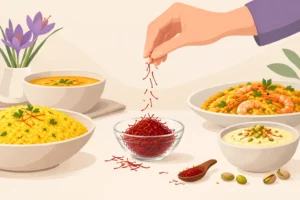
Gently crush a small pinch of threads with your fingers or a mortar and pestle. Add 2 to 4 tablespoons of warm water, warm milk, broth, or melted ice, then let it rest for 10 to 20 minutes. The liquid should become richly golden and aromatic. Add both the threads and liquid to your dish.
Water that is boiling hard can flatten saffron’s delicate perfume. Very cold liquid works too, but it takes longer. Warm liquid is the practical choice for most home cooks. For a more intense infusion, let crushed saffron bloom for up to an hour before cooking.
Timing depends on the recipe. Add saffron early enough to color rice, grains, soups, or sauces evenly. For delicate custards, tea, and cream-based desserts, add the bloom after the base has cooled slightly so the aroma stays clear. A long simmer will not necessarily improve the flavor. Too much heat can make saffron taste muted or medicinal.
Saffron is concentrated. More is not always better. For many recipes serving four to six people, 10 to 20 threads are enough to create a noticeable aroma and golden color. A larger dish such as paella, biryani, or saffron rice for a gathering may need a generous pinch.
The exact amount depends on the dish and the potency of your threads. Rice and broth-based dishes can carry a more assertive saffron flavor. In a delicate vanilla custard or simple tea, start small. You can always make the next batch stronger, but an overused amount can bring too much bitterness.
It also depends on what surrounds the saffron. Cream, milk, butter, nuts, and sweet fruits soften and extend its floral side. Tomato, seafood, onion, and stock highlight its earthy warmth. Citrus can brighten it, but use it carefully. Strong acids, smoked spices, and heavy garlic can cover saffron’s finer notes.
Saffron belongs in more than rice. Its warm floral character works beautifully with chicken, lamb, seafood, eggs, lentils, potatoes, and winter squash. It brings quiet elegance to a simple chicken soup and unmistakable character to a celebratory pilaf.
In sweet recipes, saffron pairs naturally with milk, cream, pistachios, almonds, cardamom, rose, orange, pear, and dried fruit. A few threads can transform a rice pudding, shortbread, custard, or baked bread without making the dessert taste heavily spiced.
For tea, bloom a few threads first, then add them to hot water with cardamom or honey if desired. Let saffron remain the center of the cup. Its flavor is too precious to bury under an overly strong blend.
Knowing what to avoid is as useful as knowing what to seek. Saffron should not have a harsh plastic-like smell, an overwhelming chemical bitterness, or a flat, flavorless taste. It should not turn water bright red immediately and then fade into nothing. Natural saffron releases its color gradually, creating a warm golden yellow or orange infusion.
Threads that are mostly yellow, crumbly, or weakly scented may still add some color, but they will not deliver the full saffron experience. Powdered saffron can be convenient, yet whole threads offer more confidence because you can see their color, shape, and purity before using them.
Light, heat, moisture, and air are saffron’s enemies. Keep threads in a tightly sealed container in a cool, dark cabinet, away from the stove and direct sunlight. Avoid leaving the jar open while cooking. Return it to storage as soon as you measure your threads.
Properly stored saffron can remain enjoyable for a long time, though its peak aroma is strongest when fresh. Buy an amount that suits how often you cook. A small jar is ideal for occasional home use, while multipacks and bulk quantities make sense for frequent cooks, gifting, bakeries, restaurants, and specialty food businesses.
The best way to understand saffron is to give it a simple stage. Bloom a few pure red threads, make a pot of fragrant rice or a cup of warm tea, and taste before adding too many other flavors. That first golden aroma is where saffron’s true character begins.
We proudly deliver authentic, high-quality Afghan saffron directly from the farms of Herat to customers around the world. Our mission is to offer pure, unadulterated saffron — without middlemen — ensuring you enjoy the true aroma, color, and taste of premium saffron with complete confidence.