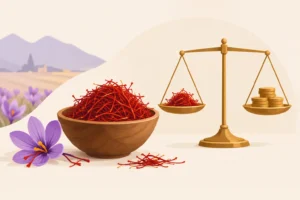

A few vivid red threads can turn a simple pot of rice golden, perfume a custard, or give tea a warm honeyed aroma. That is the pleasure of real saffron – and the reason a saffron dosage cooking guide matters. Premium Super Negin saffron is concentrated. Using more does not always create a better dish; it can introduce a medicinal, slightly bitter edge and cover the flavors you meant to highlight.
Saffron is the dried stigma of the crocus flower, handpicked and carefully processed. Each thread carries color, aroma, and flavor developed in the field and preserved through drying. Afghan saffron from Herat is especially prized for its deep crimson threads, honey-like fragrance, and clean, lingering taste. Treat it as a finishing ingredient with power, not as a pinch-and-forget spice.
For most home recipes serving four to six people, use 15 to 25 threads, or roughly 1 small pinch. This is usually enough for a rice dish, a modest pot of tea, a sauce, or a dessert. For a large family-style recipe serving eight to 10, use 30 to 40 threads. A generous saffron-forward dish, such as Persian-style rice, paella, or a festive milk pudding, may take up to 50 threads.
Weight is useful when you cook at scale. One gram of high-quality saffron contains approximately 400 to 500 threads, though thread length and thickness vary. As a practical reference, use about 0.05 gram for four servings and 0.1 gram for eight servings. Restaurants and bakeries can scale from there, but should test each recipe before committing to a production batch.
The right amount depends on three things: the potency of your saffron, the total volume of food, and whether saffron is the main flavor or a subtle accent. Pure Grade A+ Super Negin threads have considerable strength. A lower-quality or older saffron may seem to require more, but adding extra weak threads rarely delivers the clean aroma and bright color of fresh, authentic saffron.
If a recipe serves two, begin with eight to 12 threads. For a single mug of saffron tea, five to eight threads are usually enough. In a small batch of cookies, shortbread, or homemade ice cream, 10 to 15 threads will give a delicate golden tone and floral fragrance without making the result heavy.
When trying a new recipe, it is better to bloom a restrained amount first. You can add the entire infusion, then decide next time whether the dish needs a little more intensity. Saffron cannot be removed once it is in the pot.
The most reliable way to get full color and aroma is to bloom the threads before cooking. Do not toss dry threads into a hot pan and expect the same result. Direct high heat can flatten their fragrance before it reaches the food.
First, gently crush the threads with a mortar and pestle. You are not trying to make a perfectly fine powder. A few light turns release more surface area and help the saffron infuse evenly. Add the crushed threads to 2 to 4 tablespoons of warm water, warm milk, warm broth, or a few ice cubes. Let it sit for 10 to 20 minutes.
Warm liquid works quickly. The ice method takes longer, but many cooks enjoy the slow extraction it creates as the ice melts. Both methods can produce excellent results. What matters most is avoiding boiling water, which can mute saffron’s most delicate aromatic notes.
Add the golden infusion later in the cooking process whenever possible. Stir it into rice near the end of steaming, fold it into a custard after the base has cooled slightly, or add it to a sauce just before serving. For doughs and batters, the infused liquid can go in with the wet ingredients.
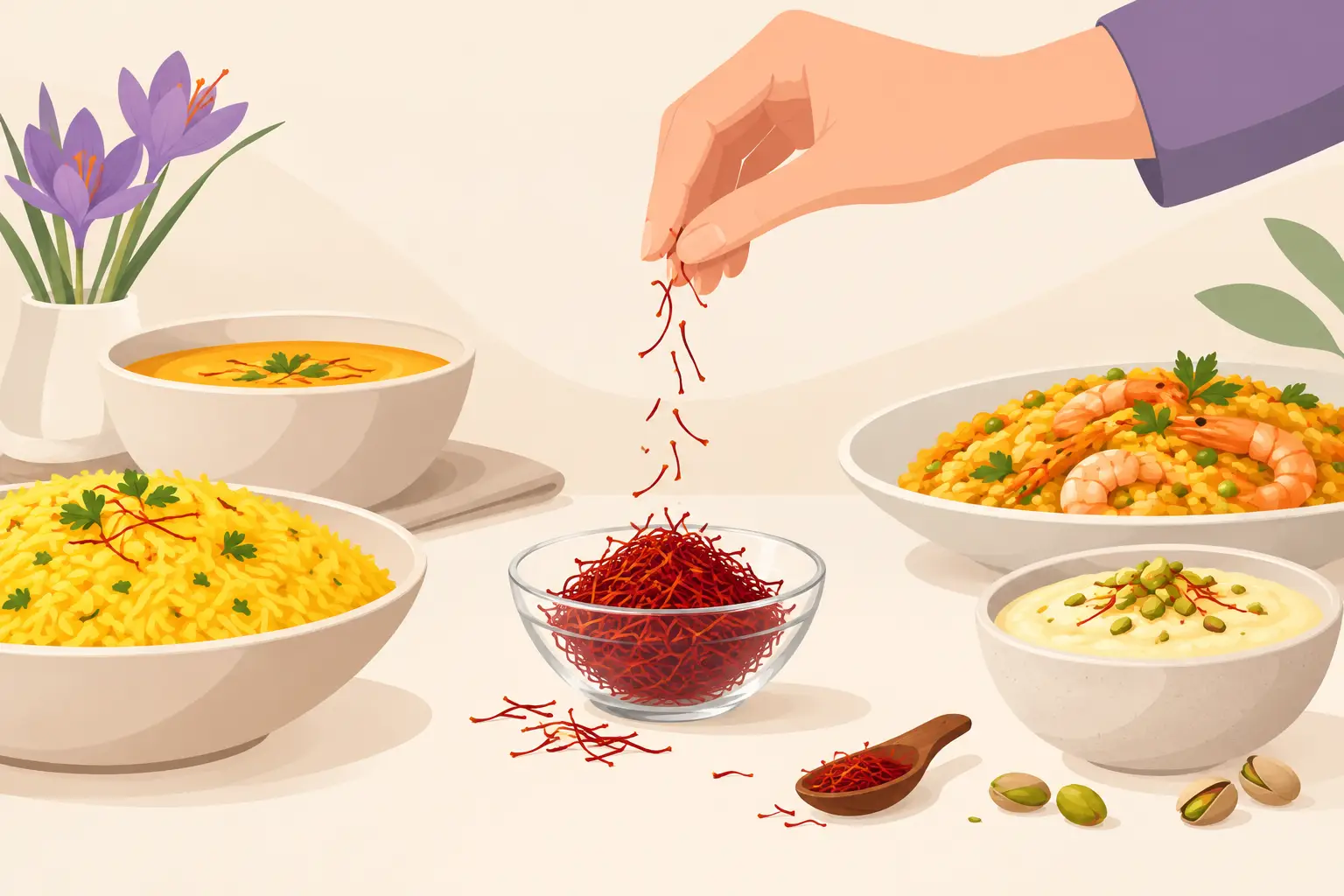
Rice is where saffron’s color is most visible. For four servings of basmati, use 20 to 30 threads bloomed in warm water. If you want the dramatic golden-and-white contrast associated with tahdig or jeweled rice, reserve the infusion for a portion of cooked rice rather than mixing it through the whole pot.
For paella or a seafood rice dish serving six, use 25 to 35 threads. The saffron should support the stock, seafood, vegetables, and smoked paprika rather than dominate them. Add the bloom to the broth so the color reaches every grain.
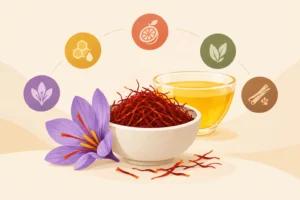
For saffron tea, start with five to eight threads per cup. Steep in hot, not aggressively boiling, water for 10 minutes. A little cardamom, honey, or dried rose can complement it, but keep the first cup simple if you want to understand the saffron’s natural aroma.
In milk-based desserts such as kheer, firni, ice cream, or custard, use 15 to 25 threads for four to six servings. Milk softens saffron’s edges and carries its floral character beautifully. Blooming the threads in warm milk is a natural choice here.
For baking, dosage depends on the batch size and the recipe’s other bold flavors. Use 20 to 30 threads for a standard cake, loaf, or batch of 12 muffins. In butter-rich pastries and buns, saffron holds up well. In chocolate desserts, it can disappear unless used with restraint and intention; white chocolate, citrus, almond, pistachio, and vanilla are often easier partners.
For soups, sauces, and braises, 15 to 20 threads are enough for a pot serving four to six. Add the bloom toward the end. Long simmering can preserve color but reduce the fragrance that makes saffron feel special.
Saffron is luxurious because a small quantity changes a dish completely. Overuse can create bitterness, a metallic note, or an overly dark color that looks less inviting than a clear golden hue. This is particularly true with pure, freshly packed threads.
Be cautious when a recipe measures saffron by tablespoons. That amount may be intended for a large commercial batch, a very mild product, or loosely packed broken threads. Counting threads or weighing a small amount is more dependable, especially when you are using premium whole threads.
The age and storage of your saffron also affect dosage. Threads stored in a tightly sealed container, away from heat, moisture, and direct sunlight, retain their character far better than saffron left near the stove. If your saffron seems faint, check storage before doubling the amount. Fresh, well-kept saffron should smell sweet, warm, and slightly earthy – never dusty or dull.
Your preference matters. Some families love a subtle saffron note in rice; others want a rich amber color for celebrations. Start with the lower end of the recommended range when pairing saffron with delicate fish, mild cream sauces, or light tea. Move toward the higher end for large rice dishes, slow-cooked stews, and desserts where saffron is meant to be recognized immediately.
It also depends on your other ingredients. A recipe with citrus, pistachio, cardamom, almond, rose, or vanilla welcomes saffron easily. Strong chile heat, heavy smoke, large amounts of garlic, or very dark chocolate can compete with it. In those dishes, either increase the saffron slightly or use it as a quiet background note rather than the centerpiece.
For repeatable results, keep a small kitchen note: number of threads, serving size, blooming liquid, and your impression of the finished dish. This simple habit is useful for home cooks and essential for food businesses. It helps you honor a premium ingredient, control cost, and build a signature flavor people remember.
Farmers Saffron brings pure, handpicked Super Negin saffron from Herat to your table. Begin with a measured pinch, bloom it patiently, and let the threads show you what real saffron can do.
We proudly deliver authentic, high-quality Afghan saffron directly from the farms of Herat to customers around the world. Our mission is to offer pure, unadulterated saffron — without middlemen — ensuring you enjoy the true aroma, color, and taste of premium saffron with complete confidence.