
A few weak threads can change the economics of an entire menu, product line, or retail shelf. That is why choosing saffron wholesale suppliers is not simply a search for the lowest price per gram. It is a decision about potency, provenance, consistency, and the confidence to put your name behind every dish or package.
For commercial buyers, real value comes from saffron that performs as promised. The threads should release a deep golden color, carry a warm floral aroma, and deliver the distinctive flavor customers expect. Afghan saffron from Herat is prized for exactly these qualities. When it is carefully handpicked, naturally processed, and handled with care from field to kitchen, a small quantity goes a long way.
Saffron is one of the world’s most valuable spices, which also makes it vulnerable to substitution, artificial coloring, excess yellow style, and vague origin claims. A supplier should make quality easy to understand, not leave buyers guessing.
Start with origin. “Imported saffron” does not tell a useful story. Ask where the crocus was grown, where the threads were processed, and whether the supplier can identify the harvest region. Herat, Afghanistan, has a long saffron-growing heritage, with dry conditions and skilled harvesting practices that help produce intensely aromatic red stigmas. A clear single-origin statement gives buyers a stronger foundation than a generic country-free label.
Then look at the supply chain. Suppliers that work directly with farmers can offer greater visibility into sourcing and handling. Fewer middlemen can also reduce the opportunities for a product to be mixed, diluted, or poorly stored before it reaches your business. Direct sourcing is not a marketing shortcut. It should be reflected in clear answers about the growers, harvest, processing, and packing.
Purity is equally essential. Quality suppliers should be prepared to discuss how they protect saffron from adulteration and how they verify the product they sell. This can include lot-level documentation, testing information when available, product specifications, and samples for qualified commercial buyers. The right level of documentation depends on your business and market. A restaurant may prioritize reliable flavor and delivery, while a food manufacturer or importer may require more detailed specifications and compliance records.
Grade names can be helpful, but they are not a substitute for examining the product. Super Negin is widely used to describe saffron threads with a high proportion of long, vivid red stigmas, minimal yellow style, and an attractive, uniform appearance. Grade A+ signals a premium positioning centered on color strength, aroma, and careful selection.
For buyers, the visual test is straightforward. Premium saffron should look predominantly red, dry, and clean. Threads should be intact rather than dusty or crushed. A small amount of natural variation is normal because saffron is an agricultural product, hand harvested flower by flower. But excessive yellow material, pale threads, broken fragments, or an unnaturally uniform dyed appearance deserve questions.
Aroma offers another useful signal. Fresh, well-kept saffron has a concentrated fragrance that is floral, hay-like, and slightly honeyed. It should not smell musty, chemical, or flat. Color should develop gradually when threads are steeped in warm water or crushed with a little sugar before blooming. Saffron that floods water with instant red dye may be artificially colored rather than naturally potent.
Still, appearance alone cannot confirm every quality claim. This is why a dependable wholesale relationship combines sensory evaluation with traceability and consistent specifications. Buy a sample or a smaller trial quantity before committing to a large order, especially when a supplier is new to your business.
The best wholesale size is not always the largest one. A 500-gram bulk format may make sense for distributors, manufacturers, high-volume caterers, and busy restaurant groups. Yet a specialty retailer with moderate turnover may protect freshness and cash flow by purchasing smaller commercial quantities more often.
Consider how quickly you will use or sell the saffron, how much storage space you have, and whether your team can portion it without waste. Saffron is powerful. Recipes often call for a pinch, not a spoonful. Buying too much without a realistic turnover plan can weaken the aroma that made the purchase worthwhile.
Packaging matters here. Look for saffron packed in a way that helps shield delicate threads from light, moisture, crushing, and strong surrounding odors. Secure, labeled packaging also makes inventory control easier. Commercial buyers should ask whether wholesale packs include lot identification, net weight, origin details, and storage instructions.
For a retailer, presentation may matter as much as bulk supply. Consumer-ready packs in sizes such as 0.5 grams, 1 gram, 2 grams, or 5 grams give customers an approachable way to try authentic saffron. For foodservice, a larger sealed format may be more practical. A supplier that offers both can support your business as it grows.
A confident supplier will answer direct questions with direct information. Before purchasing, clarify these five points:
These questions are not bureaucracy. They help you compare offers fairly. A low quote can become expensive if the product has weak color, unclear provenance, inconsistent packing, or unreliable availability. Conversely, a premium price can be justified when potency, traceability, and service reduce waste and protect the customer experience.
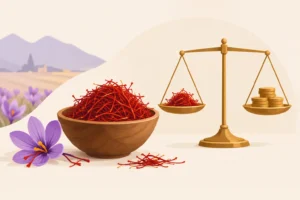
Saffron pricing varies widely because the product itself varies widely. Comparing only the per-gram price can lead buyers toward lower-potency threads that require more saffron in each recipe. The better calculation is cost per finished dish, batch, or retail sale.
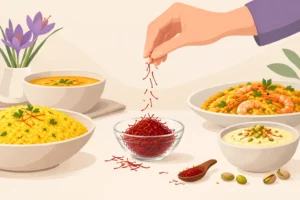
Ask your chef, product developer, or culinary team to run a simple side-by-side test. Bloom equal weights of each saffron sample, then use them in the same rice dish, pastry, tea, sauce, or infused product. Compare color, aroma, flavor, and the amount required to achieve the desired result. A richer saffron may earn its price by using less per batch.
For retail buyers, yield also includes customer trust. Clear Afghan origin, premium red threads, and storage guidance give shoppers reasons to return. For restaurants and bakeries, consistency protects signature recipes. For manufacturers, dependable lots help reduce reformulation and production surprises.
Wholesale saffron works best when the supplier understands your use case. A distributor needs dependable volume and clear specifications. A fine-dining kitchen may need a rapid restock before an event. A bakery may want a consistent thread cut and strong color for seasonal pastries. These needs are different, and a good supplier will not force every buyer into the same order model.
Communication is part of quality. Confirm reorder timing, shipment tracking, seasonal availability, payment terms, and what happens if a package arrives damaged. If you are building a branded retail assortment, ask about ongoing access to the same origin and grade rather than treating the first order as a complete evaluation.
Farmers Saffron sources premium Super Negin saffron directly from farming communities in Herat, Afghanistan, bringing a traceable, origin-led choice to distributors, retailers, restaurants, and culinary businesses. The focus is simple: pure saffron threads, carefully handled, with the vivid color and exceptional aroma that Afghan saffron is known for.
Even excellent saffron can lose character when stored carelessly. Keep threads in a tightly sealed container in a cool, dry, dark place, away from heat, humidity, and strong-smelling ingredients. Do not leave bulk saffron near a stove, dishwashing area, coffee, or pungent spices.
For larger operations, divide inventory thoughtfully. Keep reserve stock sealed and open only the amount needed for daily or weekly use. Train staff to return containers promptly after portioning. Simple handling habits protect aroma, reduce loss, and ensure the last gram performs as beautifully as the first.
The right saffron supplier gives you more than a wholesale price. They give you a product with a place, a harvest story, and a standard your customers can taste. Choose threads worthy of your kitchen or shelf, then let their color speak for itself.
We proudly deliver authentic, high-quality Afghan saffron directly from the farms of Herat to customers around the world. Our mission is to offer pure, unadulterated saffron — without middlemen — ensuring you enjoy the true aroma, color, and taste of premium saffron with complete confidence.