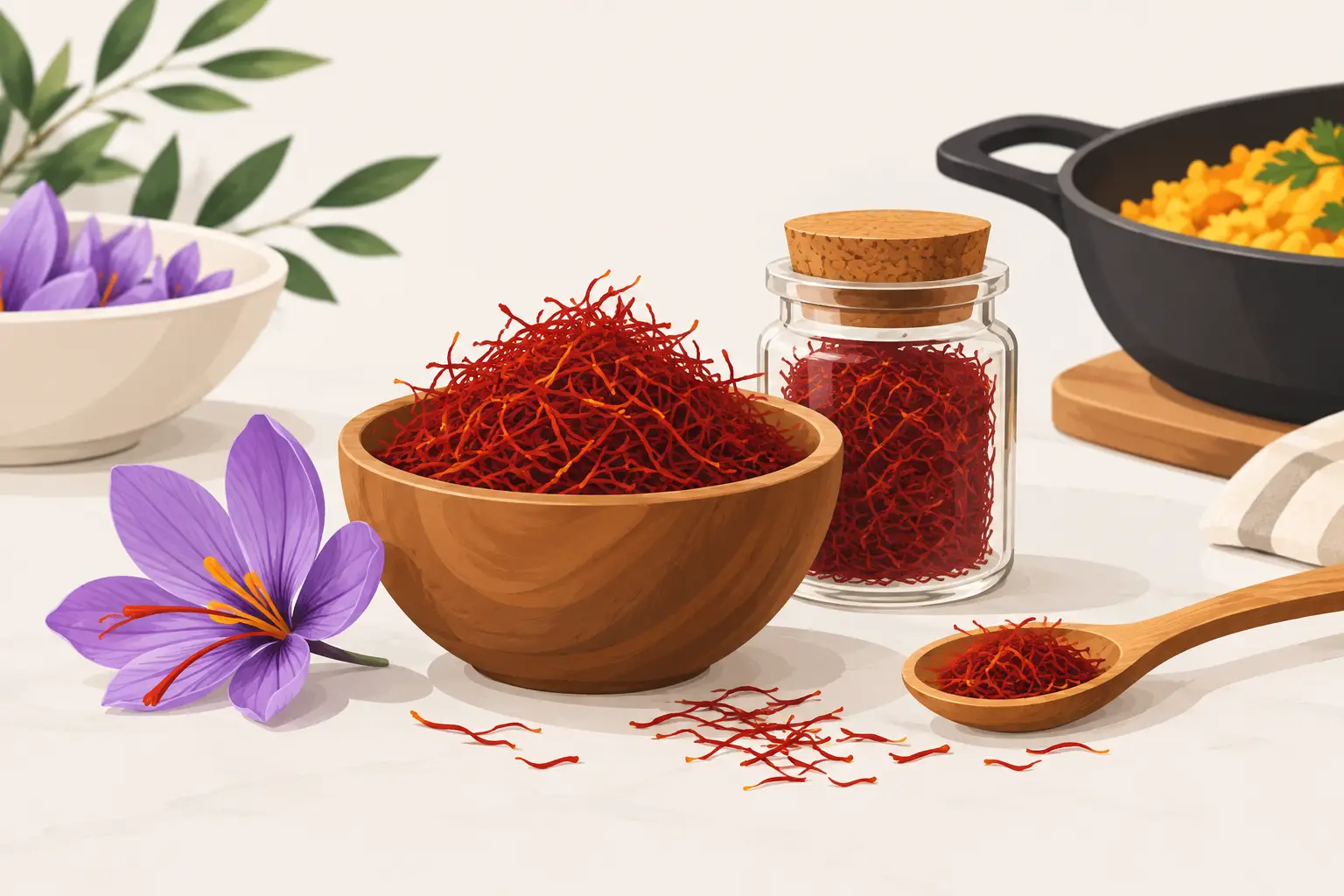
A bulk saffron buying guide should begin with one fact: low price is not the same as good value. Saffron is sold by weight, but its real value lives in its aroma, color strength, purity, and ability to perform consistently from one dish to the next. For a restaurant, bakery, tea producer, retailer, or passionate home cook, buying more only makes sense when every gram delivers the vivid character of genuine saffron.
Afghan saffron from Herat is prized for its deep red threads, honeyed floral aroma, and rich golden color. When it is handpicked, naturally processed, and handled carefully after harvest, a small amount can season a large batch of rice, broth, pastry, tea, or confectionery. That concentration is why commercial buyers should evaluate saffron with the same care they bring to fine vanilla, specialty coffee, or premium olive oil.
Bulk purchasing is not one-size-fits-all. A 500g format may suit a distributor, food manufacturer, high-volume caterer, or specialty retailer, while a restaurant with occasional saffron dishes may be better served by smaller wholesale packs. Buying too much can turn a smart unit-cost decision into a storage problem, especially if the product will sit near heat, light, or moisture.
Estimate usage from recipes, not guesswork. Track how many grams your kitchen uses per week, then consider the menu cycle and seasonal demand. A bakery producing saffron buns for holiday orders may need a larger purchase before the season. A café testing a saffron latte or tea program should begin with a smaller amount until demand is clear.
There is also a practical difference between operational bulk and retail bulk. If you will portion saffron into smaller jars for resale, account for packaging, labor, labeling, shrinkage, and how quickly the finished inventory will move. If the saffron goes directly into production, focus on consistency between batches and the storage practices of the staff who will use it.
Premium saffron should be mostly red stigma threads, not a mix dominated by yellow styles or broken fragments. Yellow and orange portions are not inherently unsafe, but they add weight without bringing the same aroma or coloring power. For buyers paying by the gram, thread appearance matters.
Super Negin is a sought-after style because its threads are long, thick, and visibly red, with minimal yellow at the ends. Grade labels can vary by seller and market, so the name alone should not close the decision. Ask what the grade means in practice: Are the threads hand-selected? Is the origin named? Is the product sold as pure saffron threads rather than powder or a blend?
Aroma offers another useful clue. Fresh, well-kept saffron has a distinctive fragrance that is warm, floral, slightly sweet, and earthy. It should not smell flat, musty, or artificially perfumed. Its color should develop gradually in warm water, milk, or broth, creating a clear golden hue. A dramatic, immediate red burst can be a warning sign of added dye, although visual tests alone cannot prove authenticity.
For commercial purchasing, request clear product information before committing to volume. A dependable supplier should be able to identify the saffron’s country and growing region, explain its grade, and describe how it is processed and packed. Traceability is not decorative language. It tells you whether the product has a real path from farm to kitchen.
Herat has a long saffron-growing tradition, and its dry climate and experienced farming communities produce threads known for expressive aroma and color. Origin does not replace quality control, but vague origin should make a buyer pause. Labels such as “premium imported saffron” say very little. A named region gives you a starting point for evaluating the product and building a story your customers can trust.
Direct sourcing can matter just as much. When fewer middlemen stand between the farmer and the buyer, there is more visibility into harvest, handling, and supply. Farmers Saffron works directly with Afghan farmers to bring Super Negin Grade A+ threads from Herat to kitchens and businesses that value authentic provenance.
For most buyers, whole threads are the safest bulk format. They are easier to inspect, harder to disguise with fillers, and more stable for long-term storage than ground saffron. Threads also let chefs control preparation, whether that means blooming them in warm liquid, grinding them with a pinch of sugar, or steeping them for tea.
Powder has a place in standardized industrial applications, but it requires greater confidence in the supplier. Ground material is more difficult to visually verify and more vulnerable to adulteration. If a recipe requires powder, consider grinding whole threads shortly before use. The result is fresher aroma and more control over each production batch.
Broken threads are another trade-off. They can be entirely usable and may cost less, particularly for applications where appearance does not matter. Still, whole Super Negin threads generally offer a stronger premium presentation for retail, gifting, visible garnishes, and culinary programs where ingredients are part of the guest experience.
A lower price per gram can be expensive if the saffron is weak, diluted, or old. Strong saffron often requires less product to achieve the desired aroma and golden color. That means the useful cost is the cost per finished dish, not simply the number printed beside a bulk package.
Build a simple kitchen test before placing a large repeat order. Bloom a measured amount of saffron from each sample in the same quantity of warm water. Use the infusion in a familiar recipe, such as rice, syrup, custard, or broth. Compare color, fragrance, flavor, and the amount needed to reach your standard. Keep notes. A repeatable test protects consistency better than a quick visual comparison.
Be realistic about the role saffron plays in your recipe. In a delicate Persian-style rice dish, saffron is the signature. In a heavily spiced sauce, its nuances may be less visible. The right grade and quantity depend on the application, but purity should not be negotiable.
Saffron has a long shelf life when it is protected properly, but it is not invincible. Its delicate aromatic compounds fade with exposure to light, heat, humidity, and air. Large-format purchases need a storage plan before the package arrives.
Keep threads in airtight, food-safe containers in a cool, dark, dry cabinet. Avoid clear jars on open shelves, warm areas beside ovens, and refrigeration where condensation can introduce moisture. If your bulk supply will be opened frequently, divide it into smaller working containers and leave the remaining inventory sealed. This reduces repeated air exposure and makes kitchen handling cleaner.
Use a first-in, first-out system. Label each container with the receiving date, lot information if available, and the date opened. Train staff to use a dry spoon or clean gloves. Saffron is light, fragile, and valuable; careless handling creates waste faster than most buyers expect.
Proper storage preserves quality. It does not restore aroma to old or poorly handled threads. Purchase from a supplier with reliable turnover and avoid stocking far beyond your realistic usage. For some businesses, two smaller orders per year are wiser than one oversized order that lingers in storage.
A reputable bulk supplier should welcome practical questions. Ask where the saffron was grown, whether it is pure thread saffron, what grade is being offered, and how it has been packed. For larger orders, ask about available documentation, lot consistency, lead times, and whether the supplier can support repeat purchasing at the same quality level.
Price matters, but unusually cheap saffron deserves careful scrutiny. Saffron harvesting is labor-intensive: each thread comes from the stigma of a crocus flower and must be separated and dried with care. Authentic saffron has a real production cost. When the price appears too good to be true, test the product before making it central to your menu or retail assortment.
For retailers and distributors, consider the customer experience as well. Can you confidently explain the origin? Do the threads look beautiful through appropriate packaging? Will the product’s aroma and color encourage a second purchase? Bulk buying is not only a procurement decision. It is a promise you make to every person who cooks with the saffron after you.
The best bulk saffron order is one you can use with confidence: pure red threads, a clear Herat origin, careful storage, and enough potency to make every pinch count. Let the first golden bloom in your kitchen be the standard for every batch that follows.