
A small pinch can change an entire dish. It can turn plain rice golden, give custard a floral depth, or bring a warm honeyed aroma to tea. But when comparing Afghan saffron vs Iranian saffron, the country on the label tells only part of the story. The real difference comes down to growing region, harvest practices, thread selection, freshness, and whether the saffron reaches your kitchen pure and properly handled.
Iran and Afghanistan both produce exceptional saffron from the same flower, Crocus sativus. Both traditions are deeply rooted in the region’s food culture. Yet Afghan saffron, especially saffron from Herat, has earned a distinct reputation among cooks and professional buyers for its vivid color, naturally sweet aroma, and carefully selected red threads.
Iran has long been the world’s largest saffron-producing country, with generations of farming knowledge and a broad range of grades sold into global markets. Iranian saffron can be excellent. It is also sold in enormous volume, which means quality can vary widely between farms, exporters, processors, and retail packages.
Afghanistan’s saffron industry is smaller, but its leading growing region, Herat, is particularly well suited to saffron cultivation. Dry conditions, mineral-rich soil, cool winters, and warm growing seasons support the development of aromatic, deeply pigmented stigmas. Herat sits close to Iran’s historic saffron-growing areas, but Afghan farmers have built their own identity around careful hand harvesting and premium thread selection.
Origin should not be treated as a shortcut for quality. There is superb Iranian saffron and weak Iranian saffron, just as there is superb Afghan saffron and poorly handled Afghan saffron. A clear origin, however, gives buyers a starting point. When the seller can identify the growing region, grade, and supply chain, it is much easier to buy with confidence.
Saffron is the dried stigma of a flower. Each blossom produces only three delicate red stigmas, and harvesting them is labor-intensive. That is why saffron is valuable and why careful sorting matters so much.
Premium saffron should consist primarily of red stigmas with minimal yellow or white style attached. The red portion carries the color, aroma, and flavor compounds cooks want. Threads should look dry and intact, not dusty, crushed, oily, or unnaturally uniform.
Afghan Super Negin saffron is prized because it is made from long, thick, deeply red stigmas that have been selected for appearance and potency. These threads are usually free from the pale yellow bases found in lower-grade saffron. In the kitchen, that means a small amount can deliver a clear golden color and a rich fragrance without adding excess bitterness.
Iranian saffron is also sold under names such as Negin, Sargol, Pushal, and other grade descriptions. These names can be useful, but they are not a guarantee by themselves. One seller’s Negin may not look or perform like another’s. Ask what is actually in the package: whole red threads, clear origin, recent harvest handling, and no fillers.
The best saffron does not smell like a sweet candy or perfume. Its aroma is more complex: warm, floral, slightly hay-like, and subtly earthy, with notes that can feel like honey, dried grass, and clean leather. The flavor is delicate but unmistakable, especially when the threads are bloomed before cooking.
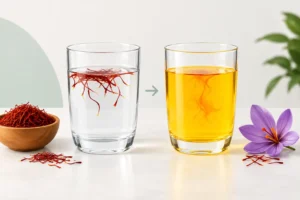
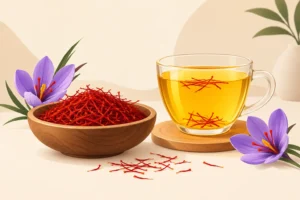
High-quality Afghan saffron from Herat is often recognized for an exceptionally aromatic profile and strong color release. When bloomed in warm water, milk, or ice, the threads gradually create a clear yellow-gold infusion. The fragrance should rise naturally from the cup.
Fine Iranian saffron can produce the same beautiful effect. The practical difference is not that one country’s saffron always has more color or aroma than the other. It is that a carefully sourced, premium Afghan Super Negin product offers a more consistent standard for buyers looking for long red threads, strong performance, and an identifiable farm-to-kitchen story.
Avoid judging saffron by color alone. Threads that are extremely bright, glossy, or red from end to end can sometimes be treated or colored. Real saffron releases color slowly. It should tint liquid golden yellow, not immediately turn it dark red like food dye.
Saffron is among the world’s most commonly adulterated spices. Low-quality products may be mixed with dyed plant fibers, turmeric, safflower, corn silk, or moisture-heavy threads. Powdered saffron deserves particular caution because it is much harder to inspect before buying.
This is where traceability becomes more valuable than a country name. Look for whole threads, not powder. Choose saffron with a stated origin and a defined grade. Buy from a specialist that can explain how the saffron is sourced, processed, and stored.
Pure threads have a trumpet-like shape at one end and a thin stem at the other. They should be predominantly red, with a dry, crisp texture. A few yellow style ends do not automatically mean the saffron is poor, but a package full of pale material is usually not the concentrated, premium grade many recipes require.
Direct sourcing also reduces unnecessary handling. Every extra broker, repackaging step, and anonymous transfer creates more opportunity for substitution, old stock, or unclear labeling. For a high-value ingredient used by the pinch, reliable provenance is worth paying attention to.
Herat saffron carries more than culinary value. It supports farming communities that have chosen a high-value crop requiring skill, patience, and handwork. The harvest is brief, and flowers must be picked and separated quickly to protect the stigmas’ quality.
For home cooks, that care shows up in simple ways: fewer threads needed for saffron rice, a brighter infusion for tea, and a more expressive aroma in desserts and sauces. For restaurants, bakeries, and food producers, it means more predictable performance from batch to batch.
Farmers Saffron works directly with Afghan farmers to bring Super Negin Grade A+ saffron from Herat to customers who want that level of clarity. The goal is straightforward: pure, handpicked threads with authentic origin and the aromatic strength a premium recipe deserves.
Choose Afghan saffron when you want a single-origin product with long, selected red threads and a pronounced aroma. It is an especially strong choice for buyers who value direct farmer sourcing, traceable Herat provenance, and Super Negin presentation for gifting or elevated home cooking.
Choose Iranian saffron when you have found a trusted seller with transparent sourcing, a clear grade description, and fresh whole threads. Iranian saffron has a long and respected culinary history, and a good lot can be outstanding.
For either origin, do not let a low price make the decision for you. Genuine saffron takes thousands of flowers to produce even a small quantity. A suspiciously cheap package may contain old threads, lower-grade material, or something other than saffron altogether. Compare the grade, weight, thread appearance, origin information, and seller’s handling standards before comparing price alone.
Saffron performs best when bloomed rather than tossed dry into a recipe. Lightly crush the threads between your fingers or with a mortar, then steep them in a few tablespoons of warm water, warm milk, or melted ice for 10 to 20 minutes. Add both the liquid and threads near the end of cooking.
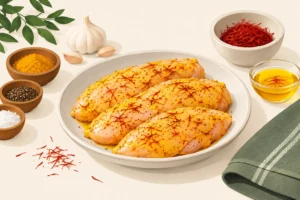
This method is useful whether you are making Persian-style rice, Afghan pulao, paella, risotto, ice cream, saffron tea, or a simple syrup for cocktails and desserts. Use restraint. More saffron is not always better. Too much can push its refined floral character toward bitterness.
Store threads in an airtight container away from heat, light, and moisture. A cool, dark pantry is ideal. Do not leave saffron beside the stove or in a clear jar on a sunny shelf. Proper storage protects the aroma and color you paid for.
The best saffron is the one you can identify, trust, and use with pleasure. Choose whole red threads, bloom them patiently, and let the harvest from Herat or Iran speak for itself in the finished dish.