
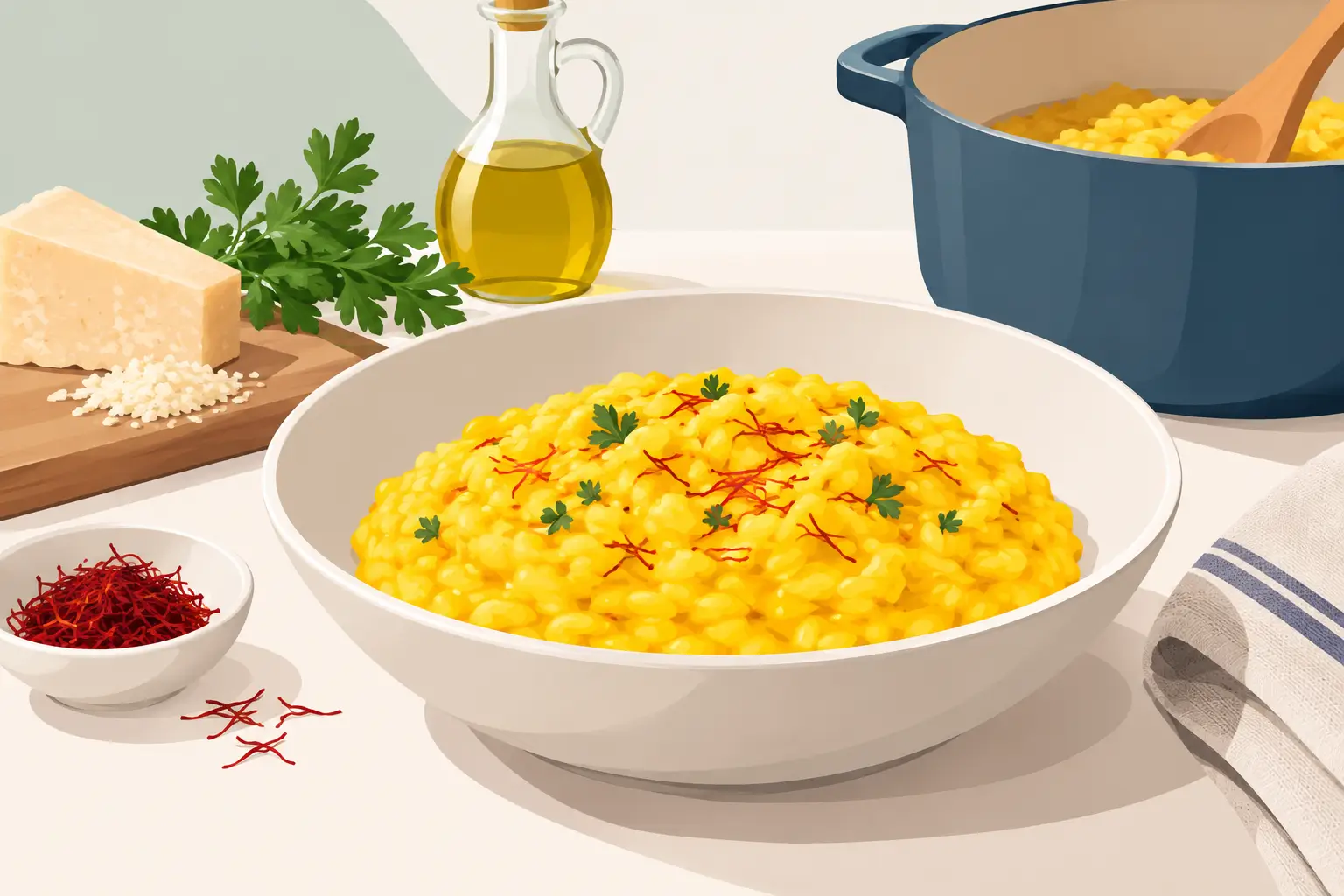
A proper saffron risotto announces itself before the first bite. The color is warm gold, the aroma is floral and honeyed, and every grain of rice is tender with just enough resistance at its center. Learning how to cook saffron risotto is less about difficult technique than respecting a few essential details: excellent saffron, the right rice, hot stock, and unhurried attention.
This is a dish built from restraint. Too much saffron can make it medicinal. Too little leaves the rice pale and flat. Too much stock at once turns risotto into ordinary rice. Get the balance right, and a handful of ingredients becomes something deeply comforting and quietly luxurious.
Saffron is the soul of this recipe, so quality shows immediately. Look for deep red threads with a clean, sweet, hay-like fragrance. Premium Super Negin saffron is prized for its long red threads, rich color strength, and concentrated aroma. It needs no artificial color and no heavy hand in the pan.
For four servings, use about 20 to 30 threads, or roughly 1/8 teaspoon of loosely crumbled saffron. That may appear modest, but authentic saffron is powerful. The goal is a clear golden color and a perfume that moves through the rice without overwhelming the butter, cheese, and stock.
Farmers Saffron brings handpicked Afghan saffron from Herat directly from farming communities to the kitchen. Its naturally aromatic threads are especially well suited to this classic preparation, where purity has nowhere to hide.
Do not toss dry saffron threads straight into the risotto. First, gently crush them between your fingers or with a mortar and pestle. Add them to 1/4 cup of hot, not boiling, stock or water. Let the threads steep for 15 to 20 minutes while you begin the rice.
This small step is called blooming. It draws out saffron’s color and fragrance so it disperses evenly through the dish. Boiling water can mute delicate aromatic notes, while a long steep in warm liquid gives you a more rounded, vivid result.
For four generous servings, gather:
Carnaroli is often the first choice for risotto because it holds its shape well and releases plenty of starch. Arborio is more widely available and still makes an excellent, creamy dish. Avoid long-grain rice. It does not release the starch that gives risotto its characteristic texture.
Choose a stock you would be happy to drink on its own. Since it is added gradually, its flavor becomes part of every bite. A light chicken stock offers richness, while vegetable stock keeps the dish vegetarian and lets saffron take center stage.
Set your stock in a saucepan over low heat. It should stay hot but never boil aggressively. Adding cold stock to the rice interrupts cooking and makes it harder to achieve a consistent texture.
In a wide, heavy-bottomed pan, warm the olive oil with 1 tablespoon of butter over medium heat. Add the shallot with a small pinch of salt. Cook for 2 to 3 minutes, until softened and translucent. Do not let it brown. Saffron risotto should taste clean and delicate, not deeply caramelized.
Add the rice and stir for about 2 minutes. Each grain should be coated in fat and lightly toasted around the edges. This step, known as tostatura, helps the rice maintain a distinct center as it cooks. You may hear a soft crackling sound, but the grains should not take on dark color.
Pour in the wine and stir until it has nearly evaporated. The wine gives the finished risotto a welcome lift, balancing the butter and cheese. If you prefer not to use wine, replace it with an equal amount of hot stock and add a few drops of lemon juice at the end if the dish needs brightness.
Add one ladle of hot stock, enough to just cover the rice. Stir steadily, but not frantically, until most of the liquid has been absorbed. Then add another ladle. Continue this rhythm for 16 to 20 minutes. The rice should simmer gently throughout, neither dry nor swimming in stock.
Stirring matters because it encourages the grains to release starch, creating the creamy sauce that defines risotto. But constant, aggressive stirring can break the grains and make the texture gluey. A calm stir every few moments, with attention to the bottom and edges of the pan, is enough.
After about 12 minutes, add the bloomed saffron and all of its soaking liquid. The risotto will turn a luminous yellow-gold. Continue adding stock in small amounts until the rice is al dente: tender on the outside, with a slight firmness in the middle.
Take the pan off the heat while the risotto is still a little looser than you think it should be. Stir in the remaining tablespoon of butter and the grated Parmigiano-Reggiano. This finishing step is called mantecatura. It gives the risotto its glossy body and soft, flowing texture.
Taste and adjust with salt and black pepper. Let the pan rest for one minute, then serve immediately in warm shallow bowls. Proper risotto should spread gently when spooned onto the plate. It should not stand in a stiff mound, and it should never be soupy.
The best way to judge saffron risotto is by sight, sound, and taste. The grains should look suspended in a creamy sauce rather than buried in it. When you drag a spoon through the pan, the rice should slowly settle back together. Taste a grain. It should have a tender shell and a small, pleasant bite at the center.
If the rice is still chalky, keep cooking with more stock. If it is tender but the pan seems dry, stir in a splash of hot stock before the butter and cheese. If it becomes too loose, give it another 30 to 60 seconds over gentle heat. Timing changes slightly with the rice variety, pan width, and strength of your burner, so taste is more reliable than the clock.
The most common mistake is rushing. Risotto cannot be left unattended while the rice absorbs liquid. It asks for about 20 minutes of presence, but the reward is immediate.
Another mistake is using too much cheese. Parmigiano should support saffron’s floral character, not cover it. Aged cheese is salty and concentrated, so add it gradually if your stock is already well seasoned.
Be careful with extra ingredients, too. Mushrooms, roasted squash, shrimp, or marrow can all be delicious, but they change the dish’s center of gravity. For a first saffron risotto, keep it classic. Serve it beside roasted chicken, grilled seafood, or a crisp bitter-green salad, rather than loading the pan with competing flavors.
Saffron risotto is at its finest the moment it is made. Serve it with a few extra saffron threads on top if you want to highlight the ingredient, plus a final dusting of Parmigiano. A simple garnish of parsley is welcome, but truffle oil, heavy cream, and strong herbs can hide the saffron you took care to bloom.
Leftovers will firm up in the refrigerator because the rice continues absorbing moisture. Store them in a covered container for up to three days. Reheat gently in a skillet with a splash of stock or water, stirring until creamy again. The texture will not be exactly like freshly made risotto, but it will still be satisfying. Cold leftovers also make exceptional arancini when shaped, breaded, and fried.
Make this dish when you can stand near the stove, breathe in the saffron as it opens, and serve dinner without delay. A few true red threads, patiently treated, can bring the warmth of Herat’s harvest to a simple bowl of rice.